FAQs about the Great Sphinx
The Great Sphinx has been provoking questions for thousands of years: who carved it, how old is it, what happened to its nose, and what—if anything—lies beneath it?
Here are answers to 19 of the questions most often asked about the monument. Use the subject links below to jump straight to a question, or browse from top to bottom. Historical images, archaeological evidence and links to more detailed material are included where they help illuminate the answer.
Questions by subject
The Great Sphinx: Basics
History and Construction
Meaning and Purpose
Appearance and Identity
Mysteries and Theories
The Great Sphinx: Basics
What is the Great Sphinx of Giza?
The Great Sphinx of Giza is an ancient colossal statue of a lion-bodied, human-headed figure carved directly from the limestone bedrock of the Giza Plateau in Egypt. It is the largest monumental sculpture in ancient Egypt and is sometimes described as an androsphinx, a type of sphinx with a human head and lion’s body.
The monument is also known as the Great Sphinx or simply the Sphinx. In ancient Egypt, it was referred to as Hor-em-akhet (“Horus in the Horizon”), a name preserved in hieroglyphic inscriptions.
The Great Sphinx was known in ancient Egypt as Hor-em-akhet (“Horus on the Horizon”), a name preserved in hieroglyphic inscriptions such as those shown below.
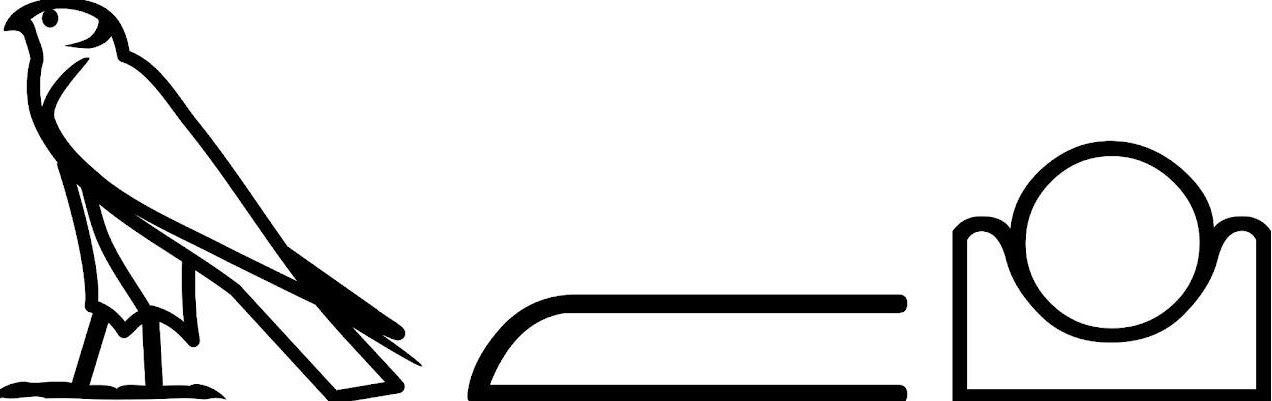
The Hieroglyphic Name of the Great Sphinx (Hor-em-akhet)
These hieroglyphs represent the name Hor-em-akhet (“Horus on the Horizon”), one of the earliest known designations of the Great Sphinx of Giza. The term reflects the Sphinx’s solar and horizon symbolism, linking it to the rising sun and the god Horus.
Source: Hieroglyphs created using JSesh. Rosmorduc, Serge. (2014). JSesh Documentation. [online] Available at: https://jseshdoc.qenherkhopeshef.org [Accessed 12 Jun. 2014].
The Great Sphinx stands on the Giza Plateau near the Pyramid of Khafre and was historically partially buried in sand, as shown in early illustrations from Napoleon’s Egyptian expedition.
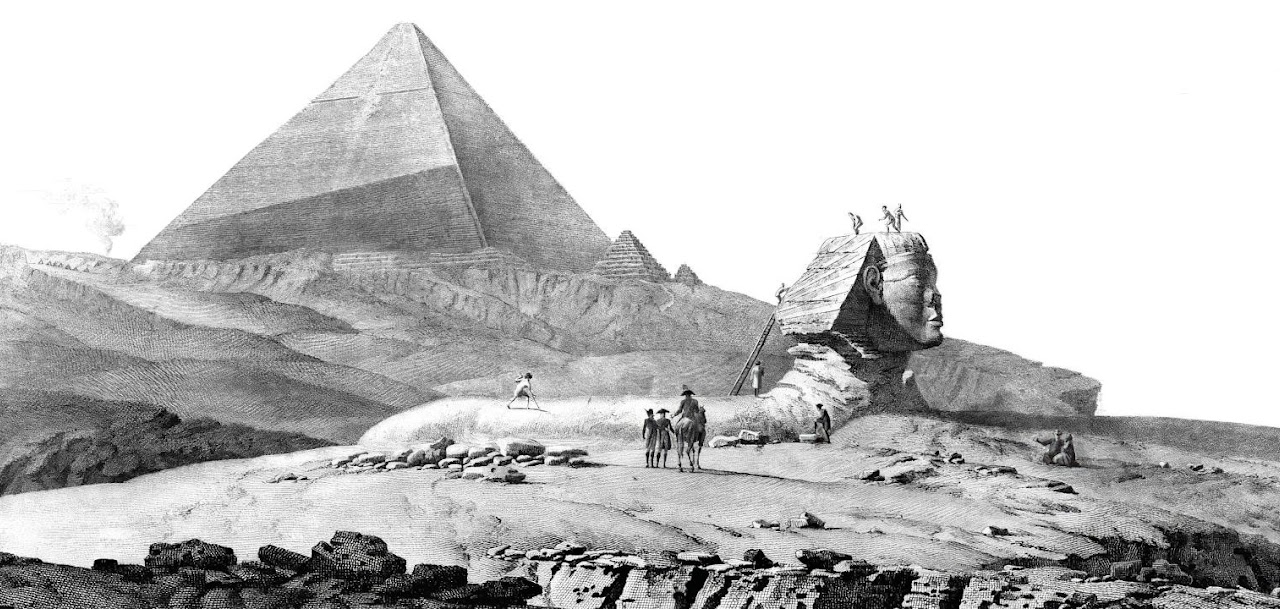
The Great Sphinx of Giza with the Pyramid of Khafre (Napoleonic Expedition Illustration)
This illustration, produced during Napoleon’s Egyptian expedition (1798–1801), depicts the Great Sphinx partially buried in sand alongside the Pyramid of Khafre. Figures shown near the monument help convey its monumental scale and document early modern European exploration of the site.
Source: Digitally enhanced from an original image in Description de l’Égyptee (1822) Rare Book Division, The New York Public Library
Where is the Great Sphinx Located?
The Great Sphinx of Giza is located on the Giza Plateau in Egypt, on the west bank of the Nile, near the pyramids of Khufu, Khafre, and Menkaure, just outside modern Cairo. It forms part of the Giza Necropolis, one of the most important archaeological sites in the world.
The position of the Great Sphinx on the Giza Plateau can be clearly seen in early aerial photographs, such as this 1904 image in which the monument has been highlighted.
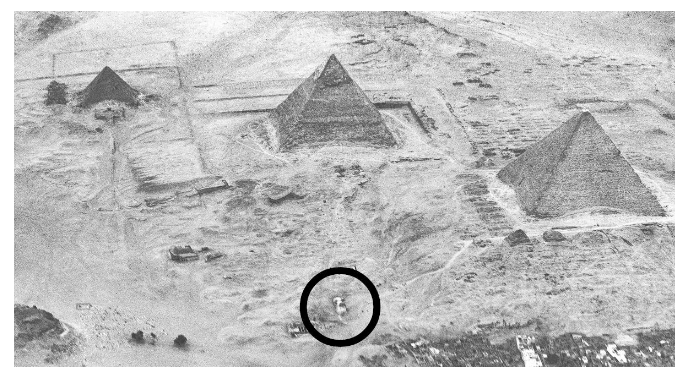
Aerial Photograph of the Great Sphinx and Pyramids of Giza (1904, Spelterini)
This early aerial photograph, taken in 1904 by Swiss balloonist Eduard Spelterini, shows the Giza Plateau from above, including the pyramids of Khufu, Khafre, and Menkaure. The Great Sphinx is highlighted within the image, illustrating its position relative to the surrounding monuments and the extent to which it was partially buried in sand at the time.
Source: Swiss National Library, Spelterini, Eduard (1904)
The Great Sphinx of Giza is located within the Giza Necropolis near Cairo, Egypt, as shown on the interactive map below.
Location of the Great Sphinx of Giza within the Giza Necropolis (Google Maps)
The Sphinx lies on the eastern edge of the Giza Plateau, close to the Pyramid of Khafre.
The Great Sphinx is located in Egypt, within the region historically known as Lower Egypt in the north-east of Africa.
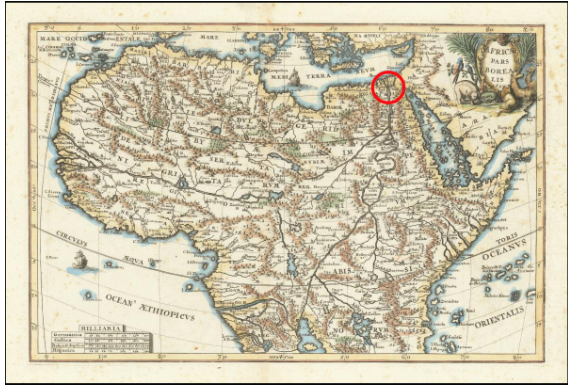
Location of Lower Egypt within North Africa (1699 Map)
This 17th-century map illustrates the position of Lower Egypt within North-East Africa. The Giza Plateau, home to the Great Sphinx, lies within this region along the Nile Valley.
Source: Ruderman Rare Maps, Africa Pars Borealis, SCHERER, Heinrich (1699)
The Great Sphinx is located on the Giza Plateau, just west of the Nile near the Nile Delta, as shown in this historical map.
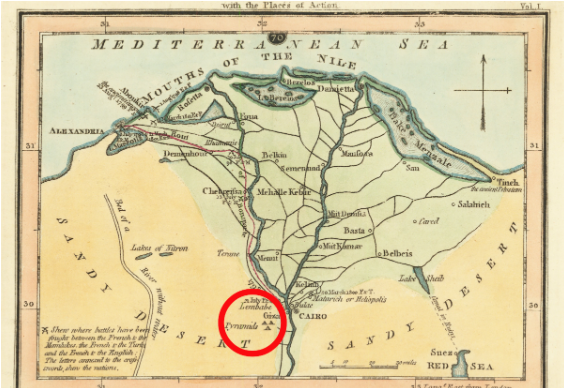
Location of the Giza Plateau near the Nile Delta (Early 19th-Century Map)
This early 19th-century map shows the Nile Delta and surrounding regions, with the Giza Plateau highlighted. The Great Sphinx and the pyramids are located on this plateau just west of the Nile.
Source: Ruderman Rare Maps, Lower Egypt, with the Places of Action, John Luffman (1801)
How big is the Great Sphinx?
The Great Sphinx of Giza is approximately 73 metres (240 feet) long and about 20 metres (66 feet) high, making it the largest monumental sculpture in ancient Egypt.
However, modern surveys provide far more detailed measurements across the body, head, and other structural features
→ View the complete dimensions and survey data of the Great Sphinx
The scale of the Great Sphinx is best understood in relation to human figures, as shown below.
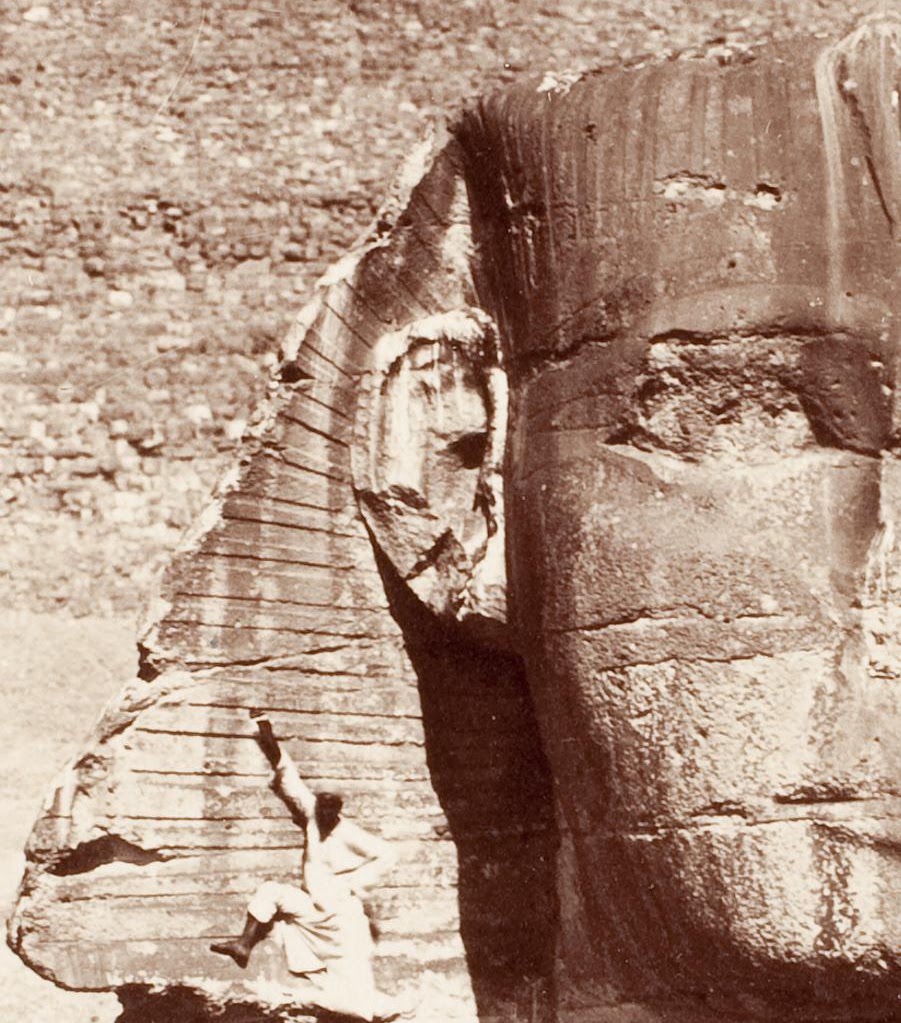
Scale of the Great Sphinx Compared to a Human Figure
This image illustrates the immense size of the Great Sphinx by comparing it to a human figure ascending the striped nemes (royal headcloth) of the monument, highlighting the scale of the carved limestone head. It provides a clear sense of proportion of the facial features of the monument. The ears and nose are higher than a person and the mouth is wider than the height of an average adult.
Source: Los Angeles County Museum of Art, Felice A. Beato (c.1860)
Modern comparisons can help visualise the scale of the Great Sphinx in relation to familiar objects.
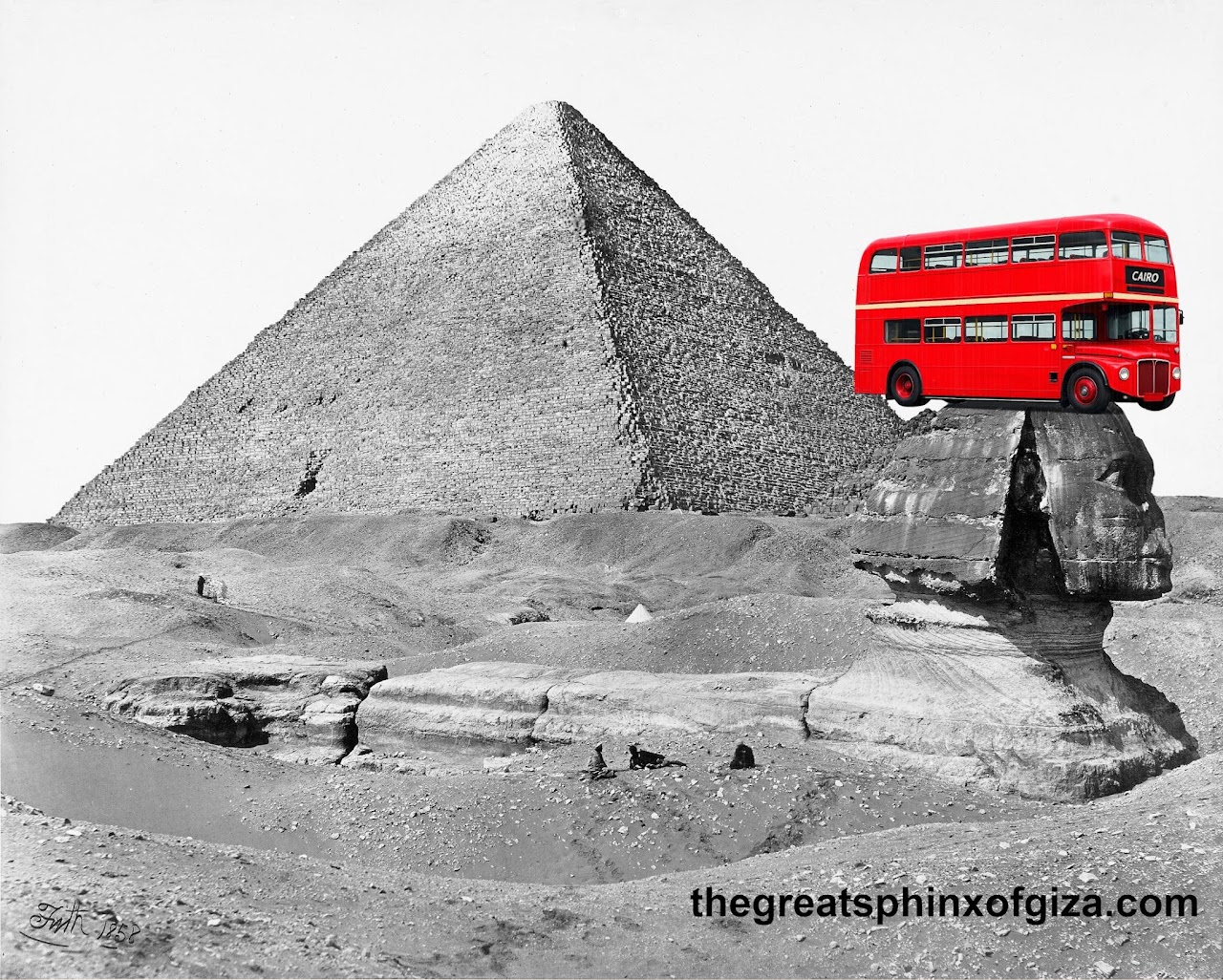
Scale Comparison of the Great Sphinx and a Double-Decker Bus
This visual comparison highlights the scale of the Great Sphinx relative to a double-decker bus, helping to convey the monument’s size in familiar modern terms.
The Great Sphinx is significantly longer than six London double-decker buses parked end to end. The face alone is roughly the width of two buses placed side by side.
Source: thegreatsphinxofgiza.com 2026 based on an original photograph by Francis Frith (1858) at The Getty Museum,
What is the Great Sphinx made of?
The Great Sphinx of Giza was carved directly from the natural limestone bedrock of the Giza Plateau, with additional limestone blocks used in some later repairs.
The limestone of the Giza Plateau, part of the Mokattam Formation, consists of alternating horizontal layers of harder and softer stone. These layers can be seen clearly on the body and head of the Sphinx, as well as in the limestone blocks used in nearby structures such as the Sphinx Temple, which was constructed using stone quarried from around the Sphinx itself.
The layered structure of the limestone used to carve the Great Sphinx can be clearly seen in blocks from the nearby Sphinx Temple.
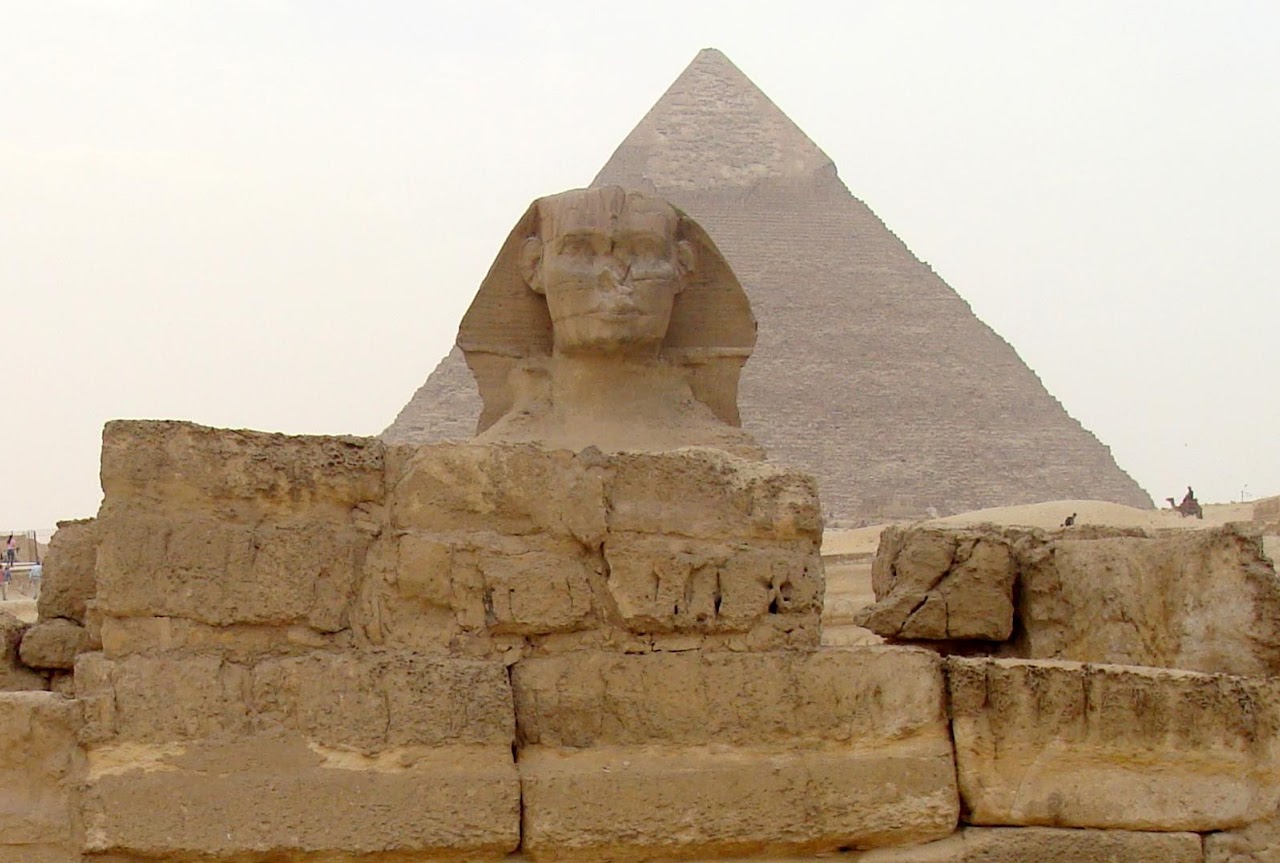
Layered Limestone Blocks from the Sphinx Temple, Giza Plateau
This image shows limestone blocks from the Sphinx Temple on the Giza Plateau, displaying the characteristic horizontal layering of the stone. These alternating bands of harder and softer limestone are part of the Mokattam Formation and are also visible in the body of the Great Sphinx itself.
➡ View the original photograph
Source: Digitally enhanced and edited from an original image at Wikimedia, Silar (2010)
The natural horizontal layers of limestone can be clearly seen across the body of the Great Sphinx of Giza.
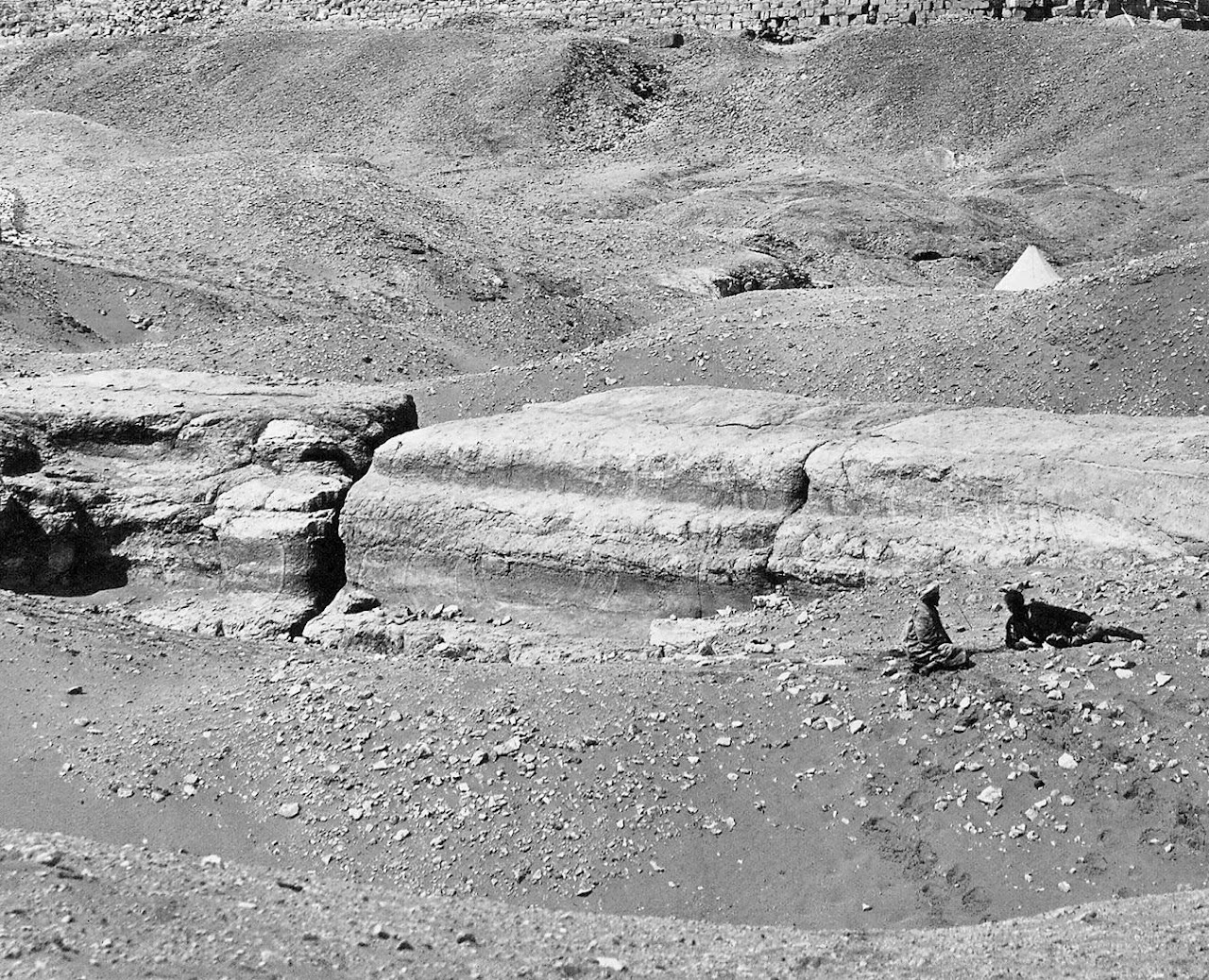
Layered Limestone in the Body of the Great Sphinx (1858)
This 1858 photograph by Francis Frith shows the body of the Great Sphinx with clearly visible horizontal layers of limestone. These alternating bands of stone reflect the natural geological structure of the Giza Plateau.
Source: Colour desaturated and edited from an original in The Getty Museum, Francis Frith (1858)
The layered limestone structure extends into the head of the Great Sphinx, where it remains clearly visible.
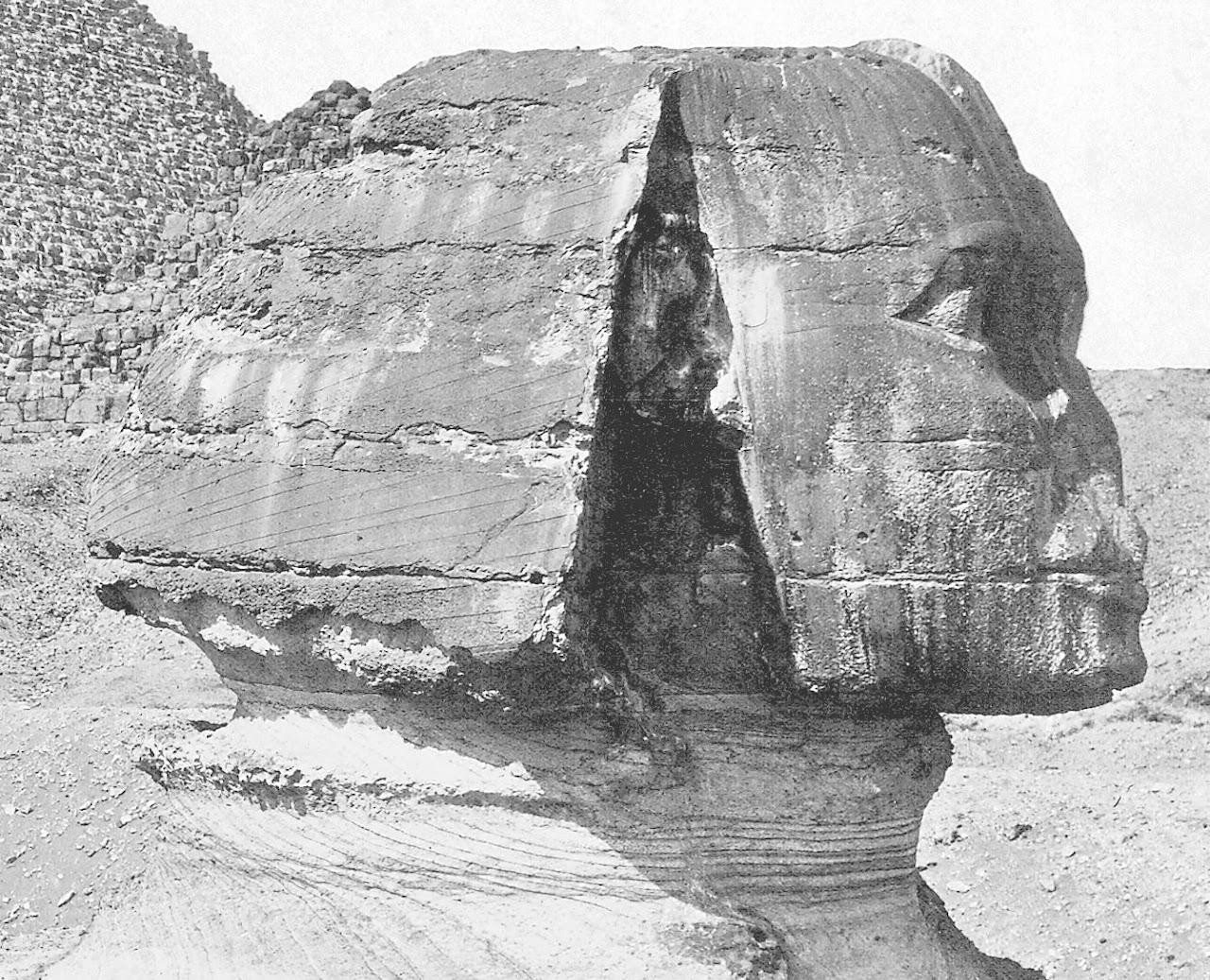
Layered Limestone in the Head of the Great Sphinx (1858)
This image shows the head of the Great Sphinx, where the horizontal layering of the limestone is visible across the carved surface. The variation in stone hardness has contributed to differential weathering over time.
Source: Colour desaturated and edited from an original in The Getty Museum, Francis Frith (1858)
History and Construction
When was the Great Sphinx built?
The Great Sphinx of Giza is generally believed to have been carved during the 4th Dynasty of ancient Egypt, around 2500 BCE, during the reign of the pharaoh Khafre and the construction of the Giza pyramids.
However, this date is debated. Some researchers, including Robert Bauval, Graham Hancock, and Robert Schoch, have proposed that the Sphinx may be much older, citing geological and astronomical evidence to support an earlier origin.
Because the Sphinx was carved directly from the natural limestone bedrock, it was never “built” in the conventional sense. Instead, it has been shaped, modified, and repaired over thousands of years.
Throughout its history, the monument has undergone extensive restoration. The body and legs have been repaired multiple times, from ancient Egyptian efforts through to Roman interventions and modern conservation work. Some researchers have also suggested that the head may have been re-carved at a later date.
More details of the Roman Repairs can be found at this page
This photograph, taken during Émile Baraize’s excavations in the 1920s, reveals multiple phases of construction and restoration across the Great Sphinx.
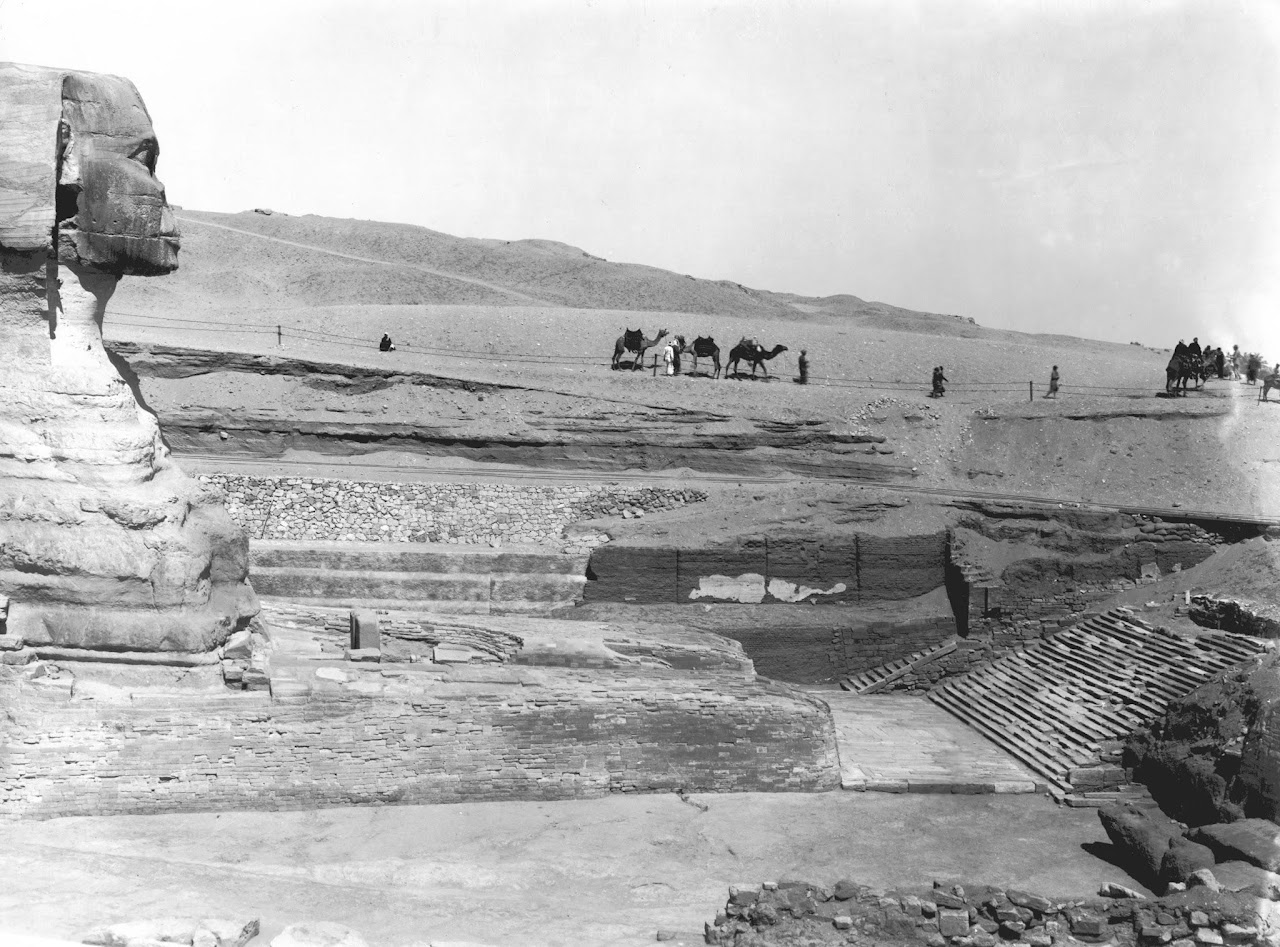
Excavation and Restoration of the Great Sphinx (Baraize c.1926)
This image from the Archives Lacau shows the Great Sphinx during excavation and restoration work carried out by Émile Baraize around 1926, exposing both the original monument and later phases of repair and modification.
Key features visible in this image:
- Baraize’s restoration of the nemes (left)
- Original limestone core of the head and body
- New Kingdom and Roman repairs to the legs
- New Kingdom mudbrick structures
- Roman-period staircase
- Old Kingdom megalithic limestone blocks (foreground)
Together, these features illustrate the long and complex history of the Great Sphinx, from its original carving to later restoration and conservation efforts.
Source: Archives Lacau, Centre Golenischeff, EPHE, PSL. “Black and White Photo 02377 from Egypt/Giza/Unspecified Sphinx Area 7“. (2017) In ARCE Sphinx Project 1979-1983 Archive. Mark Lehner, Megan Flowers, Rebekah Miracle (Eds.). Released: 2017-12-23. Licensed under CC by 4.0
How old is the Great Sphinx?
Most Egyptologists and archaeologists believe the Great Sphinx of Giza was carved during the 4th Dynasty of ancient Egypt, around 2500 BCE. This would make the monument approximately 4,500 years old.
However, because the Sphinx was carved directly from the natural limestone bedrock of the Giza Plateau, its geological origins are much older. The rock layers that form the Sphinx date back millions of years, long before the monument itself was carved.
Some researchers have proposed that the Sphinx may be significantly older than the conventional date, suggesting an earlier origin based on geological or astronomical interpretations. These views remain debated.
The Great Sphinx is one of the oldest monumental sculptures in the world and predates many well-known structures, including the Parthenon, the Great Wall of China, and the Taj Mahal.
See also How long did it take to build the Great Sphinx?
The Great Sphinx of Giza predates many of the world’s most famous monuments, as shown in the timeline below.
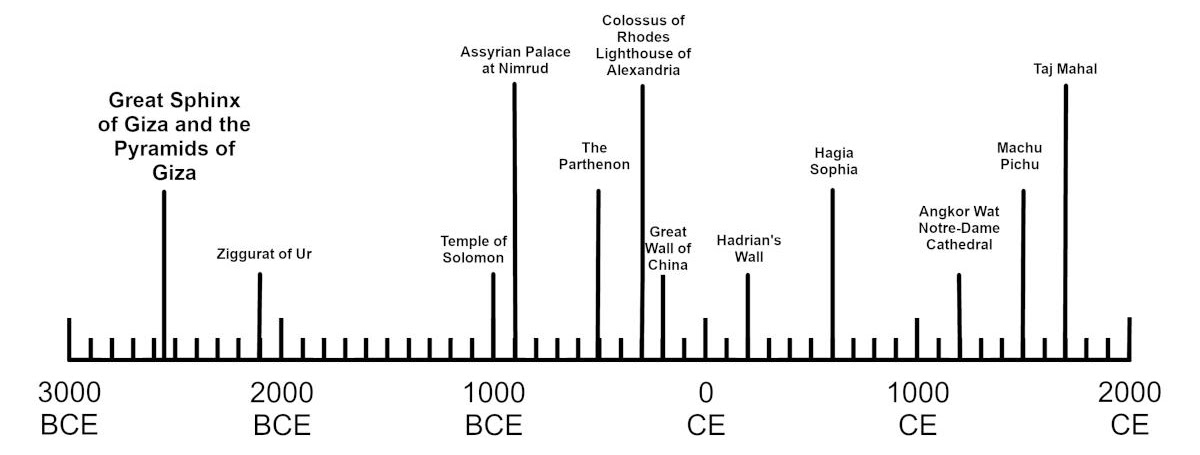
Chronological Comparison of the Great Sphinx and Major World Monuments
This timeline places the Great Sphinx of Giza (c. 2500 BCE) in context alongside major world monuments, including the Parthenon, the Great Wall of China, Machu Picchu, and the Taj Mahal, illustrating its position among the earliest large-scale stone constructions in human history.
Source: thegreatsphinxofgiza.com
Who built the Sphinx?
Most Egyptologists believe the Great Sphinx of Giza was carved during the reign of the pharaoh Khafre, the builder of the second pyramid at Giza.
The association with Khafre is based largely on the Sphinx’s location within his pyramid complex and stylistic similarities to his statues.
However, this attribution is not certain. Some researchers have suggested that the Sphinx may have been constructed during the reign of Khufu or Djedefre, based on alternative interpretations of archaeological and historical evidence.
Other researchers, including Robert Bauval, Graham Hancock, and Robert Schoch, have proposed that the Sphinx may be much older and was created by an earlier civilisation. These theories remain debated.
Khufu, builder of the Great Pyramid, is one of the pharaohs sometimes proposed as a possible creator of the Great Sphinx.
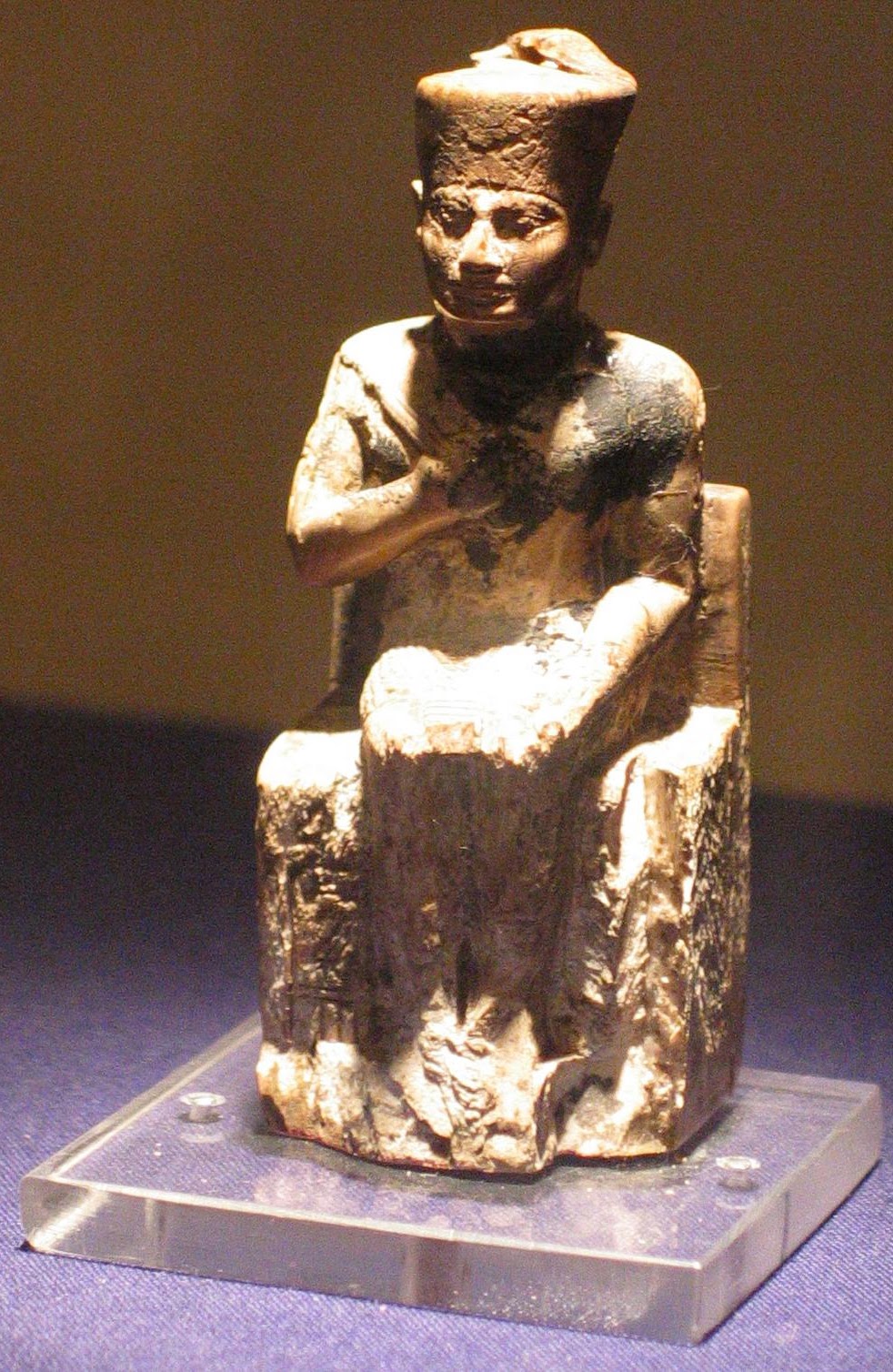
Khufu (Cheops), Builder of the Great Pyramid of Giza
Khufu, also known as Cheops, was a 4th Dynasty pharaoh and builder of the Great Pyramid of Giza. Some researchers have suggested a possible connection between his reign and the construction of the Great Sphinx at Giza.
Source: Wikimedia, Chipdawes (2003)
Djedefre, the son of Khufu and a 4th Dynasty pharaoh, has also been suggested as a possible builder of the Great Sphinx of Giza.
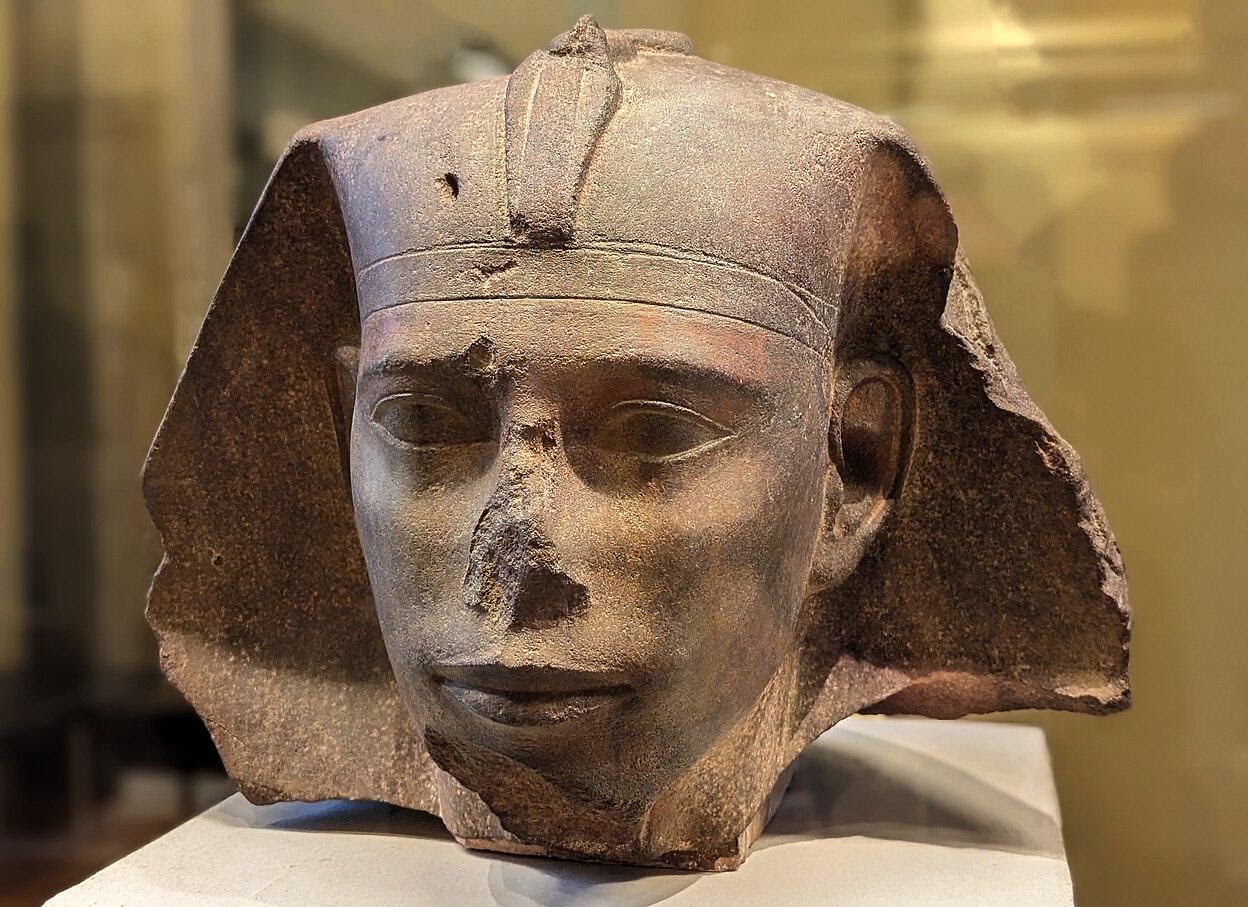
Djedefre (Djedefra), Son of Khufu and 4th Dynasty Pharaoh
Djedefre, the son of Khufu, ruled during the 4th Dynasty. Some scholars have proposed that he may have commissioned or completed the Great Sphinx.
Source: Wikimedia
Khafre, builder of the second pyramid at Giza, is most commonly identified as the pharaoh who built the Great Sphinx.
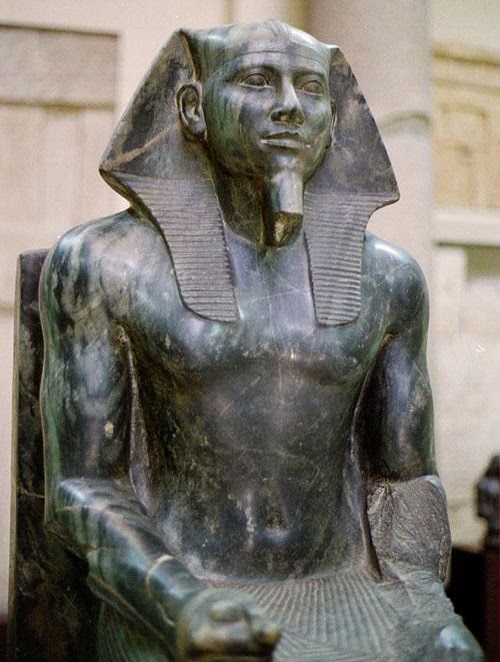
Khafre (Chephren), the Pharaoh Most Commonly Associated with the Great Sphinx
Khafre, a 4th Dynasty pharaoh and builder of the second pyramid at Giza, is most commonly identified by Egyptologists as the ruler responsible for carving the Great Sphinx.
Source: Wikimedia, Jon Bodsworth
Is there a second Sphinx at Giza?
Reports of a “second Sphinx” at Giza appear regularly, including recent claims based on remote sensing and satellite analysis. No second physical Great Sphinx has yet been archaeologically confirmed at Giza, although the idea has a much longer history than modern remote-sensing claims.
The idea itself is not new. In ancient Egyptian symbolism, the god Aker was often depicted as a pair of lions or sphinxes facing opposite directions, representing the eastern and western horizons. This dual form has led some to suggest that the Great Sphinx may once have had a counterpart.
A similar concept appears on the Dream Stele of Thutmose IV (c. 1400 BCE), where the Sphinx is shown in a paired, back-to-back arrangement. This depiction may reflect symbolic or theological ideas about Aker and the horizon, rather than a literal second monument—but it demonstrates that the concept of a “double Sphinx” existed in ancient Egyptian thought.
In addition, several 17th–18th century illustrations and travel accounts appear to show two sphinx-like forms at Giza. These images are now generally understood to reflect misinterpretations of partially buried remains or artistic reconstructions, rather than a second monument.
The idea persisted into more scholarly circles. As noted by Paul Jordan, even an eminent Egyptologist once spent time searching for another Great Sphinx on the opposite side of the Nile before eventually abandoning the idea—highlighting how limited visibility of the site once encouraged such speculation.
Modern archaeological surveys of the Giza Plateau—including extensive excavations and geophysical studies—have not identified any structure comparable to a second Sphinx. While subsurface anomalies are occasionally detected, none have been confirmed as monumental statues.
In summary, although the concept of a second Sphinx has deep historical roots in symbolism, ancient imagery, and early interpretations, it remains unproven. The Great Sphinx of Giza is currently the only known example at the site.
Some historical images showing apparent “second sphinxes” can be explored in the image gallery on this site.
Ancient Egyptian depictions of the god Aker, such as this example from the Papyrus of Ani, show two lion or sphinx-like forms representing the eastern and western horizons.
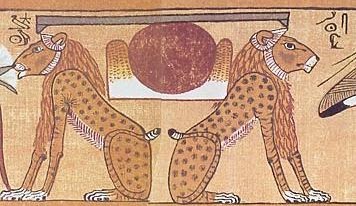
Aker depicted as twin lions from the Papyrus of Ani, symbolising the horizon and the passage of the sun.
This scene from the Papyrus of Ani depicts the god Aker as two lions facing opposite directions, enclosing the Egyptian hieroglyph for Akhet (horizon). In ancient Egyptian belief, Aker embodied the eastern and western horizons—guarding the sun’s passage as it rose and set.
While there is no archaeological evidence for a second Sphinx at Giza, images like this demonstrate that the concept of paired, horizon-facing lion or sphinx figures was deeply rooted in Egyptian symbolism.
Source: Wikimedia, Papyrus of Ani
Early modern maps and illustrations of Giza sometimes depict two sphinx-like figures, both reflecting and reinforcing the long-standing speculation about a second Sphinx.
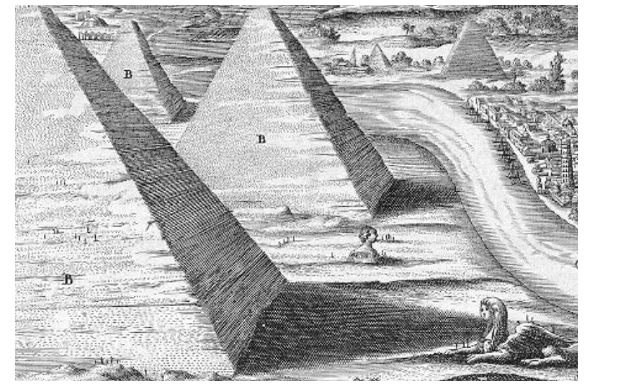
Detail from Aegyptus Hodierna (c. 1720) by Johann Baptist Homann showing two sphinx-like forms near the pyramids.
This detail from Johann Baptist Homann’s Aegyptus Hodierna (c. 1720) appears to show two sphinx-like figures at Giza—one represented as a colossal human head and another as a more complete sphinx form.
Such depictions both reflected and reinforced the long-standing idea that more than one Great Sphinx may have existed at the site.
However, these images are now generally understood to be either artistic interpretations or misreadings of earlier written accounts.
Rather than documenting a second Sphinx, images like this illustrate how the monument was perceived and interpreted before modern excavation and archaeological study clarified its true form.
Source: Yale University Library, Aegyptus Hodierna, Johann Baptist Homann’s (1720) and Ruderman Rare Maps
Ancient Egyptian imagery sometimes depicted the Sphinx in paired or dual forms, reflecting symbolic associations with the horizon.
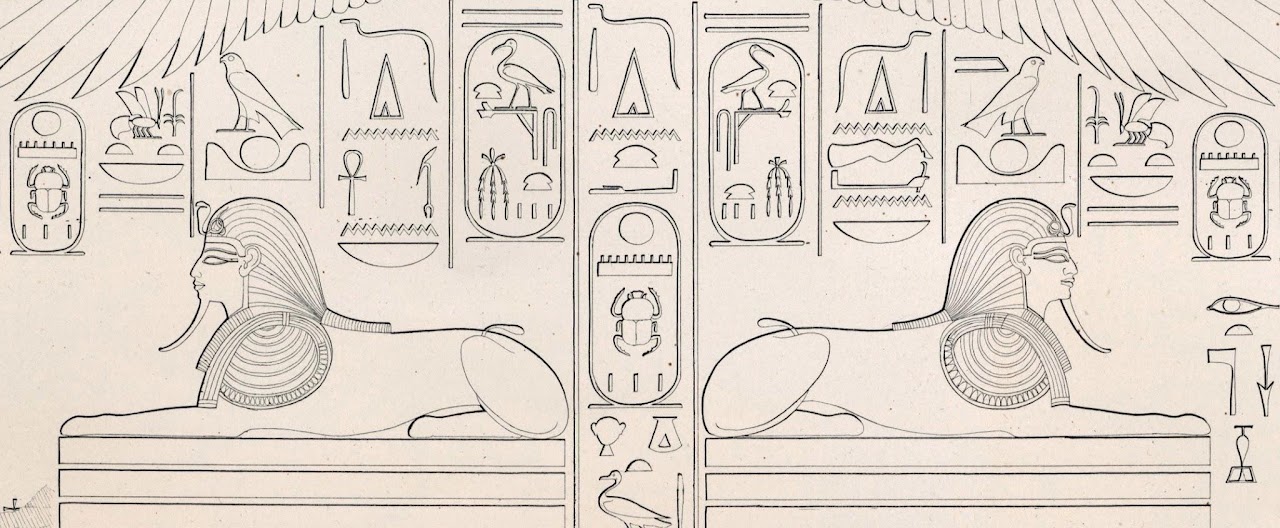
Detail from the Dream Stele of Thutmose IV showing two back-to-back sphinxes.
This detail from the Dream Stele (c. 1400 BCE), erected between the paws of the Great Sphinx, shows the monument represented in a paired, back-to-back form. Rather than indicating the existence of a second physical Sphinx, this dual depiction likely reflects symbolic concepts—such as the eastern and western horizons or the solar cycle—closely associated with the Sphinx’s religious meaning.
Source: General Research Division, The New York Public Library. Neues Reich. Dynastie XVIII. Pyramiden von Giseh [Jîzah]. (1849 – 1856) Stele vor dem grossen Sphinx.
Which pharaoh is the Great Sphinx Associated with?
The Great Sphinx of Giza lies beside the causeway linking Khafre’s pyramid and valley temple. This close architectural association is one of the main reasons many archaeologists and Egyptologists attribute the monument to the reign of Pharaoh Khafre, and believe it was carved in his likeness.
(see also Who built the Sphinx? and Whose face is on the Great Sphinx?)
Face-on alignment of the Great Sphinx and Khafre’s Pyramid on the Giza Plateau.
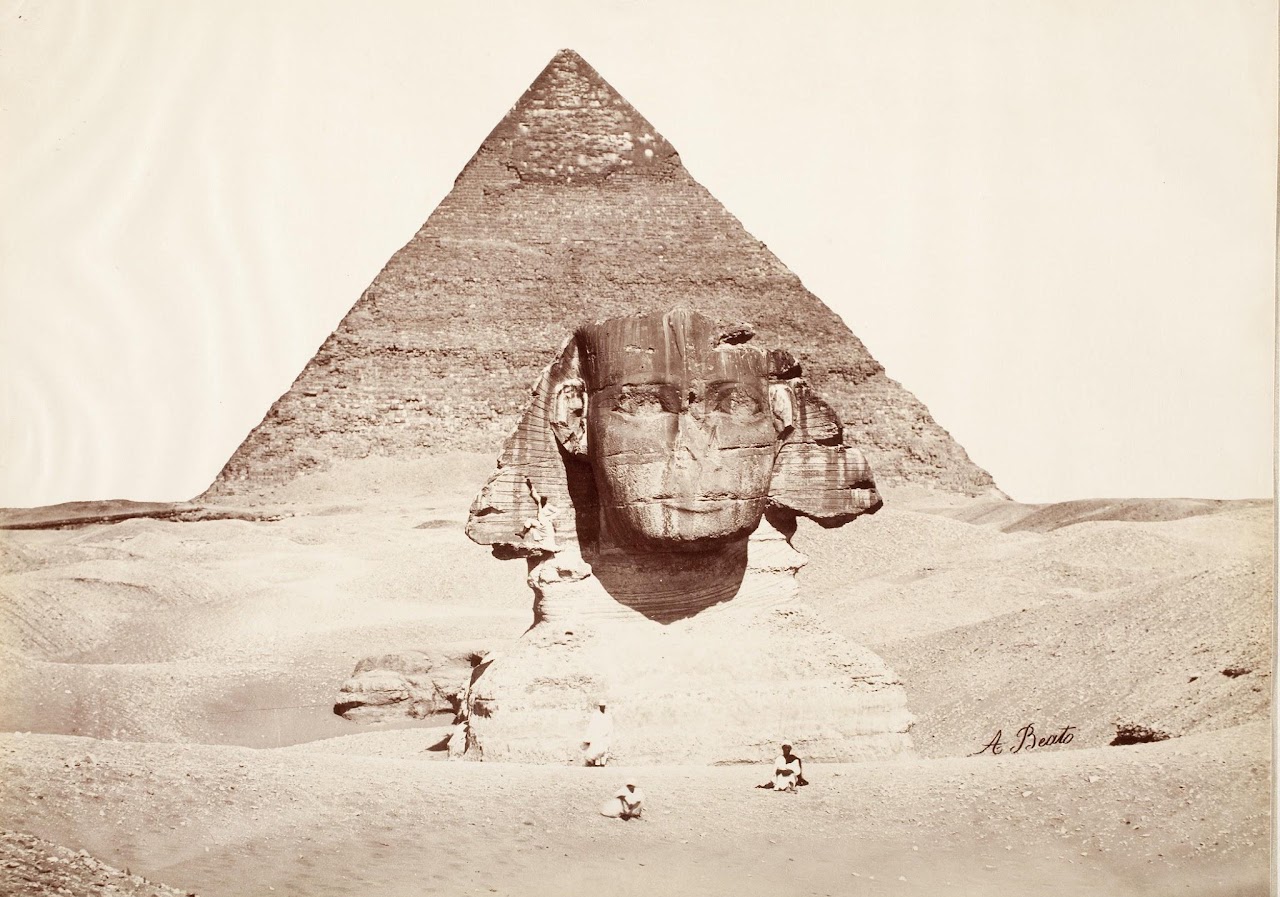
c.1860 photograph by Felice A. Beato showing the Great Sphinx aligned with Khafre’s Pyramid.
This early photograph by Felice A. Beato captures a direct, face-on view of the Great Sphinx with Khafre’s Pyramid rising immediately behind it. The composition highlights the close spatial and visual relationship between the two monuments, which lie along the same axis within the Giza complex.
This proximity—together with the Sphinx’s position beside Khafre’s causeway and valley temple—is one of the principal reasons many archaeologists and Egyptologists attribute the Sphinx to the reign of Pharaoh Khafre. The image provides a clear visual illustration of that association.
Source: Los Angeles County Museum of Art, Felice A. Beato, circa 1860
How long did it take to build the Great Sphinx?
The exact time required to carve the Great Sphinx of Giza is unknown. Unlike structures built from individual blocks, the Sphinx was carved directly from the natural limestone bedrock, making a precise construction timeline difficult to determine.
The carving of the Sphinx likely took place during a period of intense activity on the Giza Plateau, when large-scale stone-working projects were underway. However, no written records survive that describe how long the carving process took, who carried it out, or the methods used.
In addition, the Sphinx has been modified and repaired many times throughout its history. The body and legs were restored in the New Kingdom and Roman periods, with further conservation work continuing into modern times. The monument we see today was not created in a single phase but shaped and reworked over thousands of years.
See also When was the Great Sphinx built? and Who built the Sphinx?
The Great Sphinx has been shaped, repaired, and excavated over thousands of years, as shown in this image of ongoing restoration work.
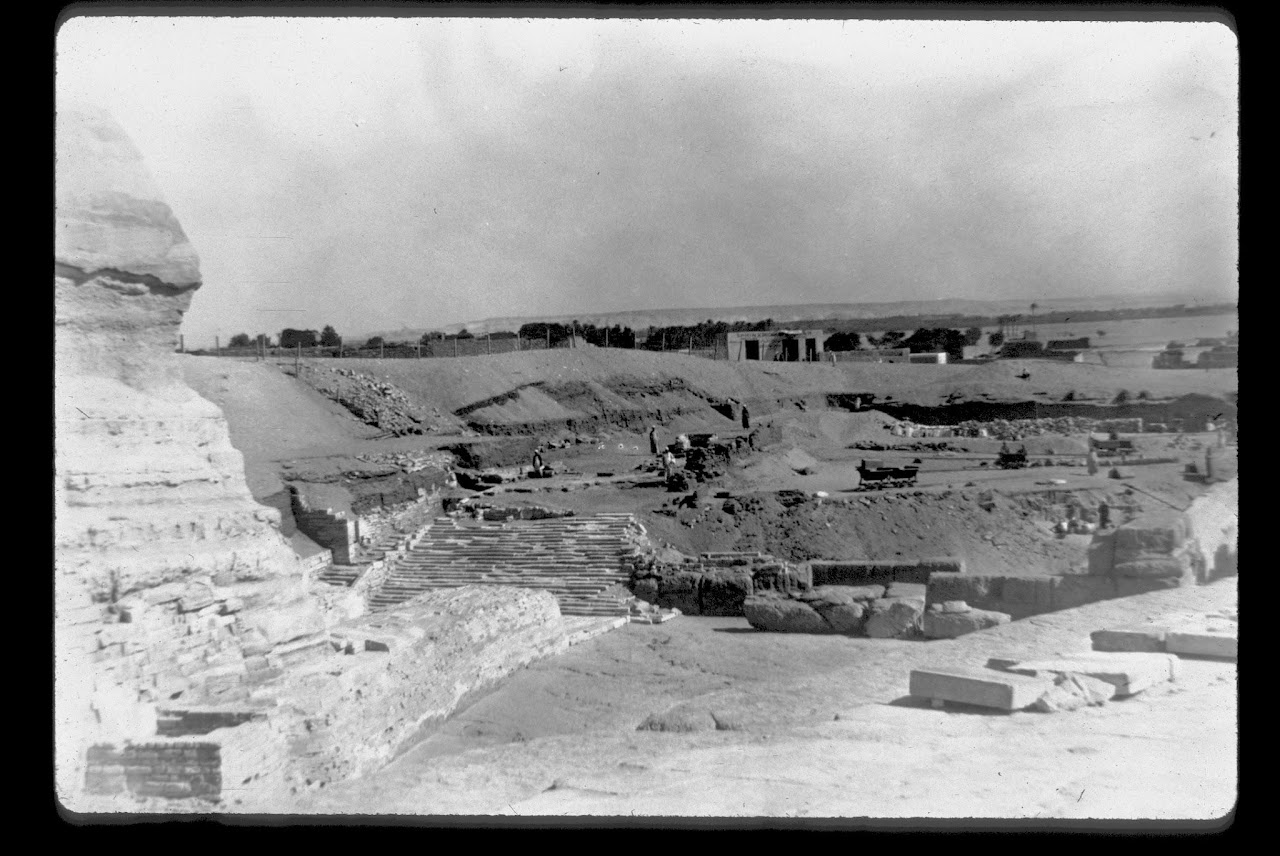
Excavation and Restoration of the Great Sphinx Showing Multiple Phases of Construction (1926)
This photograph shows the Great Sphinx during excavation and restoration work, revealing multiple phases of its history. The original Old Kingdom limestone body of the Sphinx is visible alongside Khafre’s causeway in the foreground. Later repairs to the legs from the New Kingdom and Roman periods are visible, along with a Roman staircase. In the background, workers are actively clearing New Kingdom mudbrick structures that covered the Old Kingdom Sphinx Temple, demonstrating how the monument and its surroundings have been continuously modified, excavated and restored over time.
Key features visible in this image:
- Original Old Kingdom limestone body of the Sphinx
- Khafre’s causeway in the foreground
- New Kingdom and Roman repairs to the legs
- Roman-period staircase
- Workers clearing New Kingdom mudbrick structures
- Excavation revealing the buried Sphinx Temple
Source: Archives Lacau, Centre Golenischeff, EPHE, PSL. “Color Photo 004149 from Egypt/Giza/Unspecified Sphinx Area 2″. (2017) In ARCE Sphinx Project 1979-1983 Archive. Mark Lehner, Megan Flowers, Rebekah Miracle (Eds.). Released: 2017-12-23. Licensed under CC by 4.0
Meaning and Purpose
What does the Sphinx symbolise?
The Great Sphinx of Giza is generally understood to represent kingship, combining the strength of a lion’s body with the intelligence and authority of a human head, representing the power and wisdom of the pharaoh.
Its symbolism is also closely linked to the rising sun. The Sphinx faces east toward the horizon, where the sun rises each day, and is often associated with the solar god Horus. At the summer solstice, the setting sun aligns between the pyramids of Khafre and Khufu behind the Sphinx, forming a composition reminiscent of the ancient Egyptian Akhet (horizon) symbol. This connection is reflected in its ancient name, Horemakhet, meaning Horus on the Horizon. (see What is the Great Sphinx of Giza? above)
In later interpretations, particularly from early modern European travellers, the Sphinx was sometimes seen as a symbolic fusion of a lion and a maiden, associated with zodiacal imagery such as Leo and Virgo. While these ideas are not recorded in ancient Egyptian tradition, they reflect later attempts to interpret the monument through familiar symbolic terms.
See also Why was the Great Sphinx built?
Depictions of the pharaoh as a sphinx emphasise royal strength, divine authority, and the subjugation of enemies.
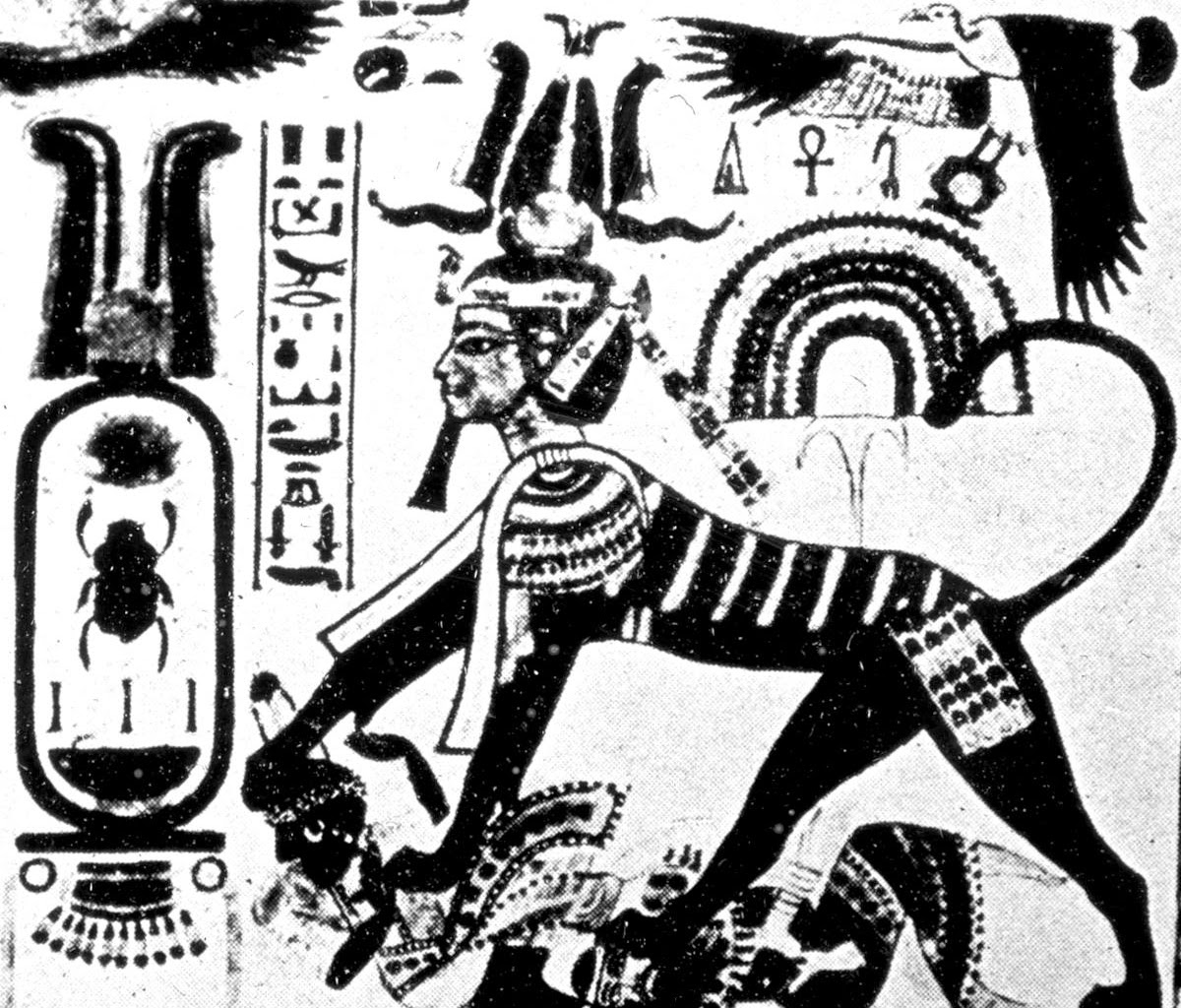
Tutankhamun depicted as a sphinx trampling his enemies, with his cartouche shown at left.
This image shows the young king Tutankhamun represented in sphinx form, combining the body of a lion with the head of the ruler. In ancient Egyptian art, this hybrid form symbolised royal strength, intelligence, and divine authority. The king is shown trampling his enemies beneath him, a visual expression of domination and order over chaos. His cartouche, visible to the left, identifies him explicitly as the reigning monarch. Such imagery reinforces the idea that the sphinx was not only a guardian figure but also a powerful symbol of kingship and royal might. This protective role is echoed by the goddess Nekhbet, shown above the king.
Source: From the Tomb of Tutankhamun KU Leuven
At the summer solstice, the setting sun aligns between the pyramids of Khafre and Khufu, forming a visual expression of the ancient Egyptian Akhet (horizon) symbol.
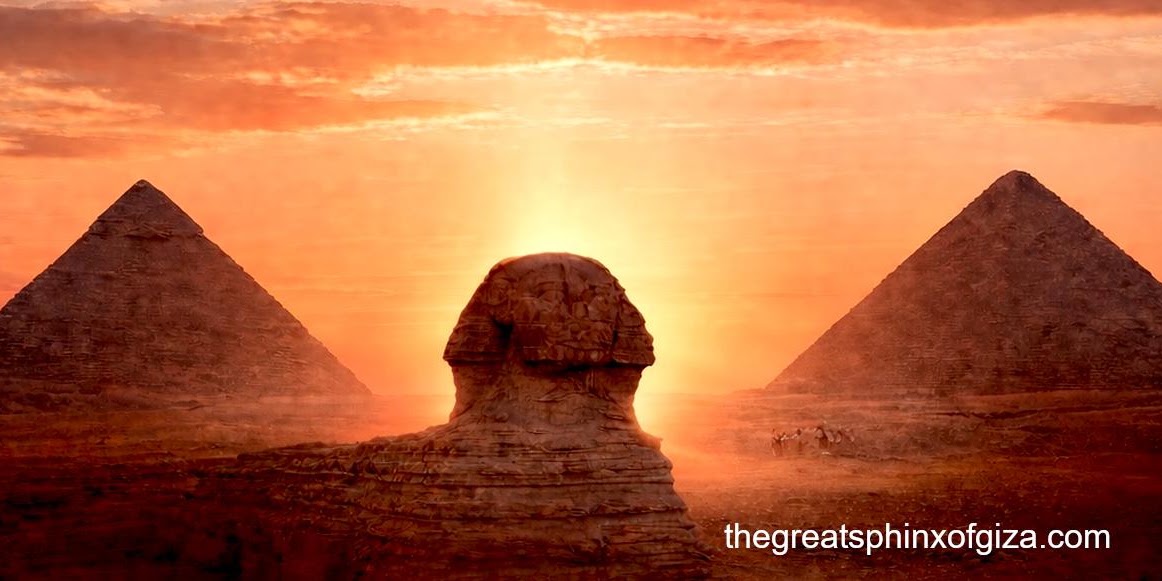
Summer solstice sunset alignment at Giza, with the Sphinx and pyramids evoking the ancient Egyptian Akhet (horizon) symbol.
This image shows the Great Sphinx of Giza aligned between the Pyramid of Khafre and the Great Pyramid of Khufu at sunset during the summer solstice. At this time of year, the setting sun appears between the two pyramids when viewed from this vantage point, creating a visual composition reminiscent of the ancient Egyptian hieroglyph Akhet, meaning “horizon.” The Sphinx, associated with Horemakhet (“Horus on the Horizon”), reinforces this solar symbolism, linking the monument to cycles of solar movement.
Source: thegreatsphinxofgiza.com
The ancient Egyptian hieroglyph Akhet represents the sun rising or setting between two hills.

The hieroglyph Akhet (𓈌), meaning “horizon.”
The hieroglyph Akhet (𓈌) depicts the sun disk positioned between two peaks, representing the place where the sun rises and sets on the horizon. This concept is closely associated with solar deities such as Horus and Ra, and is reflected in names such as Horemakhet (“Horus on the Horizon”), a title connected to the Great Sphinx of Giza.
Source: Hieroglyph created using JSesh.
What was the purpose of the Great Sphinx?
The original purpose of the Great Sphinx is not recorded in a surviving contemporary inscription. It is commonly interpreted as a royal, protective and solar monument associated with the sacred landscape of Giza.
By the New Kingdom (c. 1500 BCE), the Sphinx had taken on an additional religious role. It was associated with the god Horemakhet (“Horus of the Horizon”) and was believed to act as an oracle. According to the Dream Stele of Thutmose IV, the king received a divine message from the Sphinx promising him kingship if he cleared away the sand that had buried the monument.
Over time, the Sphinx became a place of pilgrimage. Visitors left carved inscriptions in the surrounding area, suggesting that the monument was believed to hear prayers and grant favour.
see also Does the Sphinx guard the pyramids? below
The Great Sphinx positioned at the eastern edge of the Giza Necropolis, symbolically guarding the pyramids and royal tombs beyond.
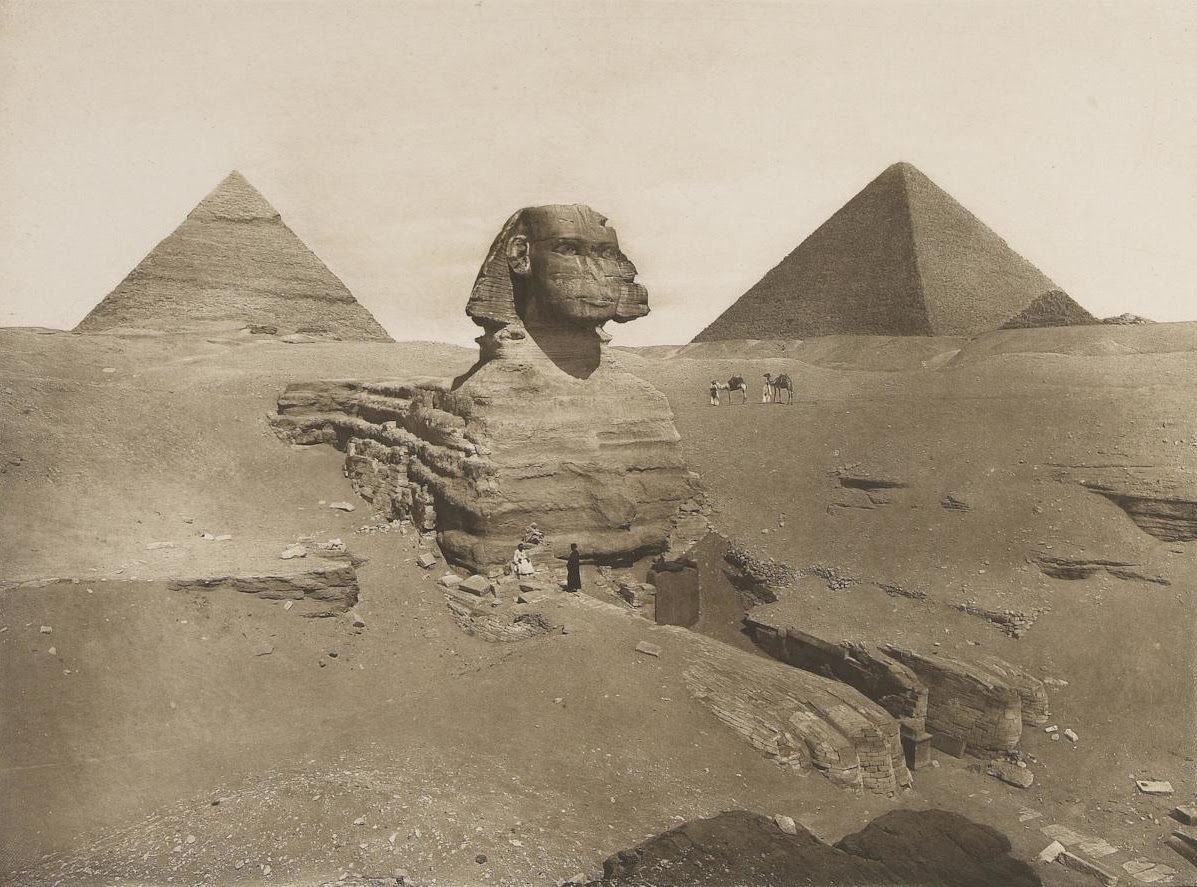
The Great Sphinx of Giza with the Dream Stele between its paws, shown partially surrounded by sand in an 1893 photograph.
This 1893 photograph shows the Great Sphinx in its original landscape context at Giza. Facing east toward the rising sun, the monument overlooks the pyramids and surrounding necropolis, reinforcing its role as a symbolic guardian of royal tombs.
The Dream Stele, set between the Sphinx’s front paws, records how Pharaoh Thutmose IV cleared the sand that had buried the monument after receiving a divine message promising him kingship. The partially buried state of the Sphinx in this photograph reflects those recurring cycles of burial and excavation that shaped its religious significance.
Together, these features illustrate the Sphinx’s dual purpose: as both a protector of the Giza plateau and a sacred site associated with divine communication and pilgrimage.
Source: Wikimedia, Junghaendel (1893)
Why was the Great Sphinx built?
No surviving contemporary text tells us exactly why the Great Sphinx was created. Within the conventional Fourth-Dynasty interpretation, it is commonly read as a monumental expression of royal power, protection and solar symbolism.
Most Egyptologists believe it was created during the reign of the pharaoh Khafre as part of his pyramid complex at Giza (see Who built the Sphinx?). Its exact purpose is not recorded, but it is widely interpreted as a symbol of kingship—combining the strength and protective power of a lion with the intelligence and authority of a human ruler (see What does the Sphinx symbolise?).
Positioned at the edge of the Giza Plateau, the Sphinx likely also functioned as a guardian of the royal tombs and sacred landscape (see What was the purpose of the Great Sphinx?).
On a broader level, the monument was intended as a statement of permanence and power. As the largest monumental sculpture in ancient Egypt, it would have inspired awe and projected the king’s authority far beyond his lifetime, demonstrating both the resources of the state and the skill of its craftsmen.
Royal sphinx statues, such as this example of Amenemhat II, help illustrate how the Sphinx form was used to represent kingship and divine authority in ancient Egypt.
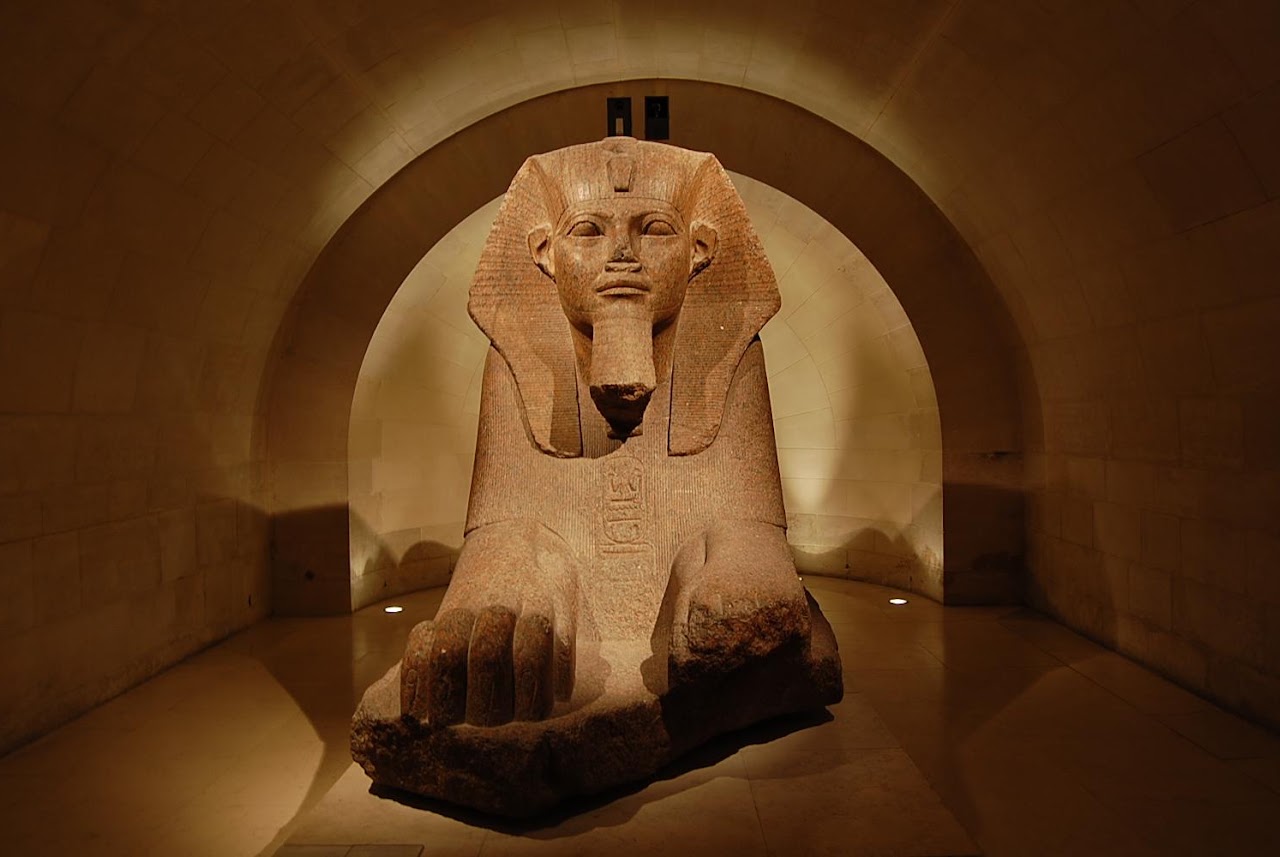
Sphinx statue of Amenemhat II (12th Dynasty), showing the fusion of lion’s body and royal human head used to symbolise kingship.
This statue of the 12th Dynasty pharaoh Amenemhat II, now in the Louvre Museum, demonstrates the standard form of the Egyptian sphinx: a lion’s body combined with the head of a king wearing the nemes headdress. This hybrid form symbolised strength, protection, and royal intelligence.
Although much smaller than the Great Sphinx of Giza, statues like this help clarify its meaning. They show that the Sphinx was not an isolated creation, but part of a wider artistic and religious tradition in which the pharaoh was depicted as a powerful, divine guardian figure.
Source: Wikimedia Photograph by Ning J. (2009) Licensed under CC BY-SA 2.0
Appearance and Identity
Whose face is on the Great Sphinx?
Khafre is the figure most commonly proposed by archaeologists and Egyptologists as the face of the Great Sphinx, but no surviving inscription definitively identifies the portrait.
However, this identification has long been debated. Some researchers have suggested that the face may instead represent Khufu, Khafre’s father, while others—including Robert Temple—have argued that it resembles Amenemhat II of the 12th Dynasty. In the 19th century, Ludwig Borchardt also proposed that it bore features comparable to statues of Amenemhat III.
Earlier interpretations were even more varied. Some travellers believed the Sphinx may have represented a deity, such as the Egyptian goddess Isis, rather than a specific pharaoh.
Although no inscription definitively identifies the face, the association with Khafre remains the most widely accepted interpretation, based on the monument’s location within his pyramid complex and stylistic comparisons with known statues.
See also Who built the Sphinx? above
Statues of Khafre are often compared with the face of the Great Sphinx, forming the basis of the most widely accepted identification.
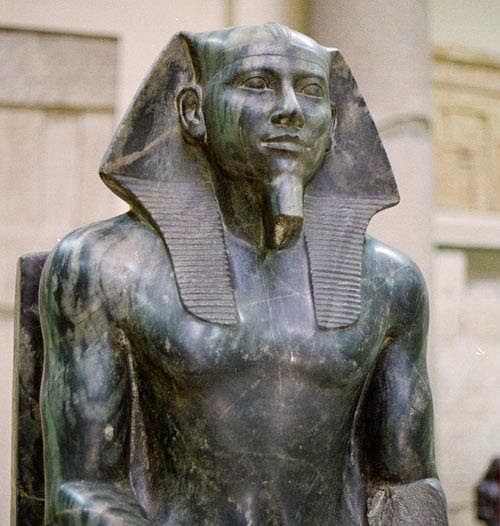
Statue of the pharaoh Khafre, widely believed to be represented in the face of the Great Sphinx.
Source: Wikimedia, Jon Bodsworth
Some researchers have suggested that the face of the Great Sphinx may represent Khufu rather than Khafre.
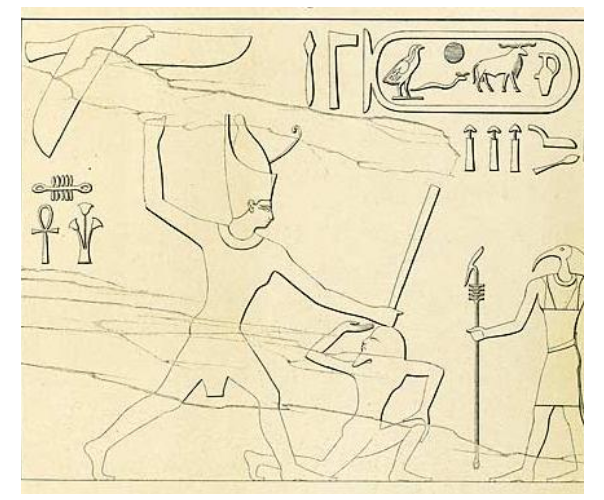
Relief of Khufu in a traditional “smiting” pose. Khufu has been proposed by some researchers as a possible candidate for the face of the Great Sphinx.
➡ View the original illustration
Source: Denkmäler aus Aegypten und Aethiopien (1849-1859) Lepsius
Some researchers have compared the face of the Great Sphinx to statues of the Middle Kingdom pharaoh Amenemhat II.
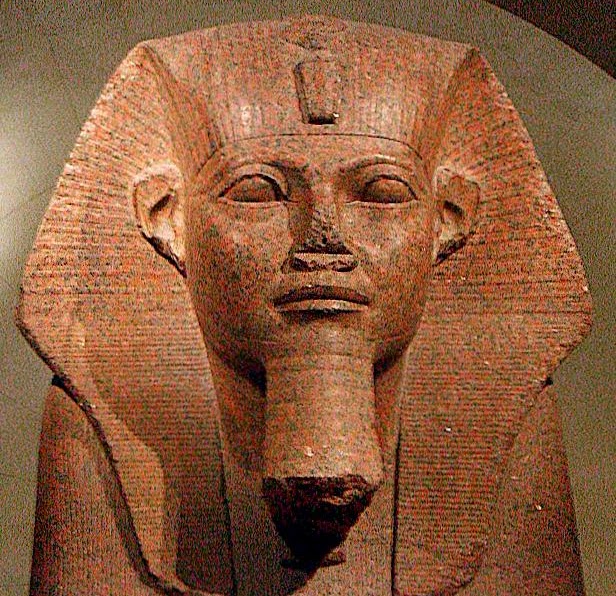
Statue of Amenemhat II of the 12th Dynasty. Similarities have been noted in discussions of alternative identifications of the Sphinx’s face.
Source: Wikimedia, Neithsabes (2007)
Ludwig Borchardt proposed that the face of the Great Sphinx resembles statues of Amenemhat III.
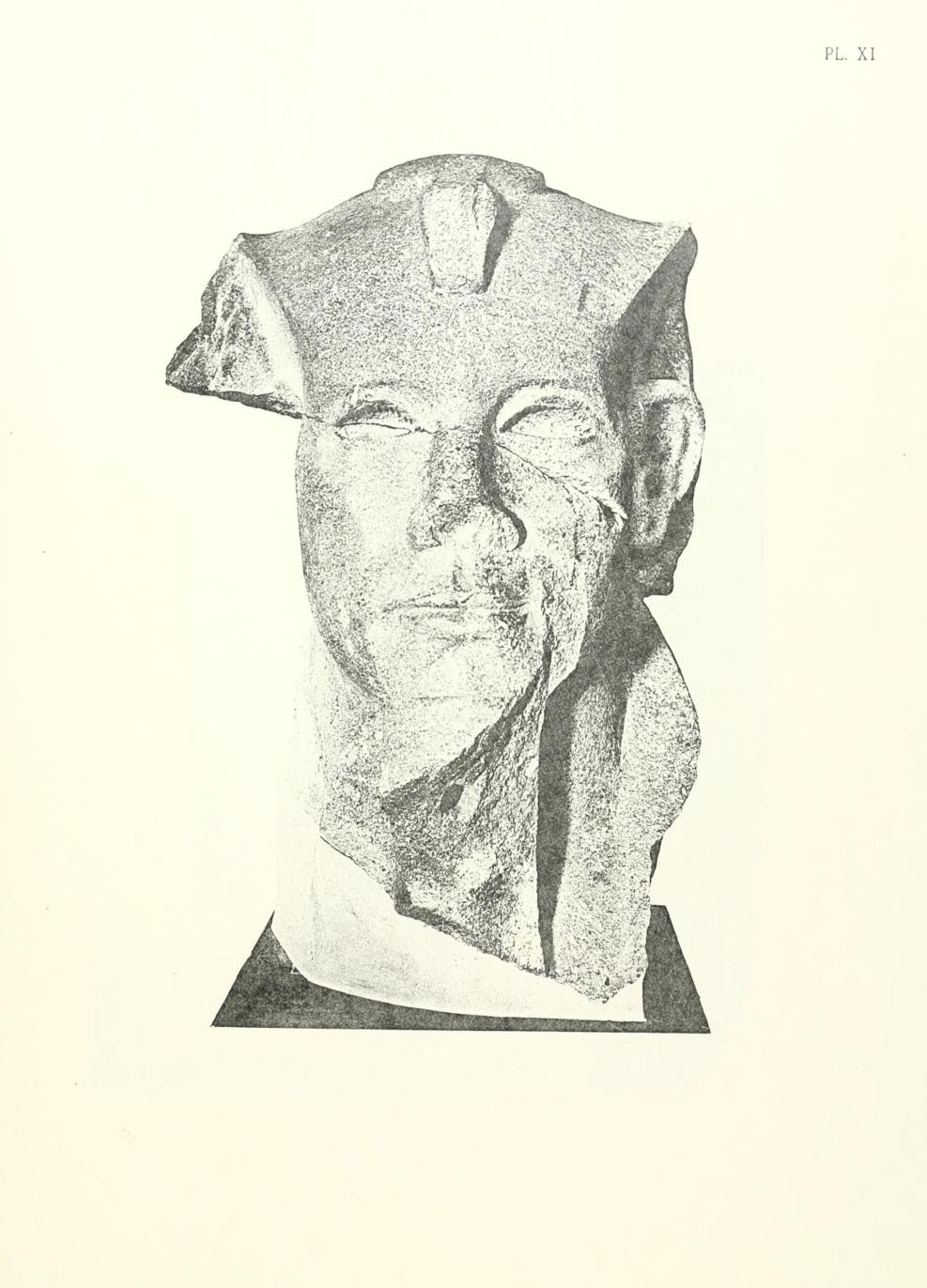
Head of Amenemhat III. Borchardt argued that certain features of the Sphinx’s face could be compared to statues of this 12th Dynasty ruler.
Source: Bubastis (1887-1889) Naville, Edouard, (1891)
Is the Great Sphinx male or female?
The consensus among archaeologists and Egyptologists is that the Great Sphinx is male, representing a pharaoh.
However, the concept of the sphinx varies across cultures. In Greek mythology, the Sphinx is typically female, and female sphinxes are also known from Egypt—for example, those associated with the 18th Dynasty ruler Hatshepsut.
For a more detailed discussion, see the dedicated article on this page.
Early European depictions of the Sphinx often portrayed it as female, drawing on classical sphinx traditions and on the damaged monument as it was then visible.
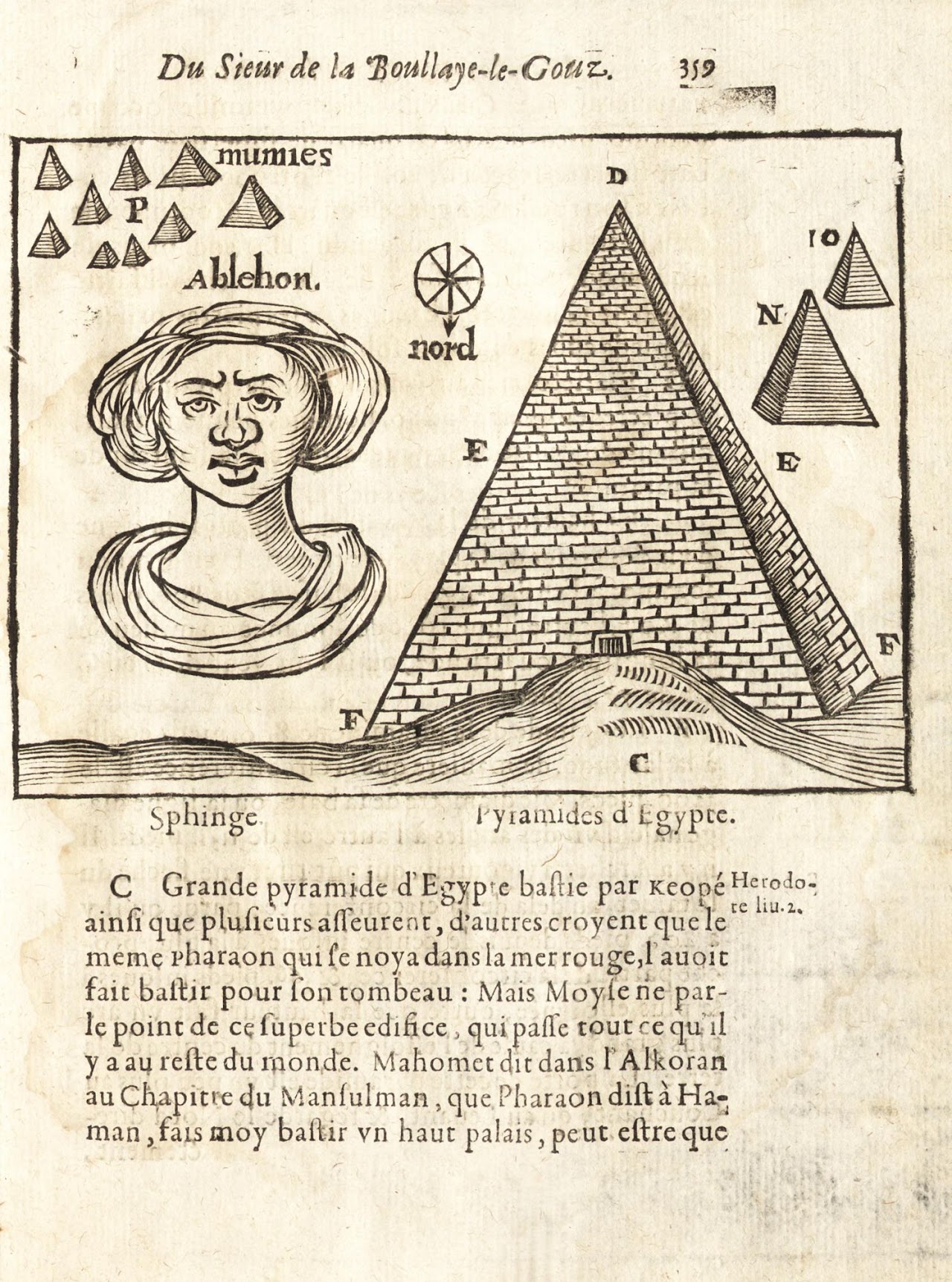
Illustration of the Great Sphinx as a female from François de La Boullaye-Le Gouz (17th century).
This early modern European depiction shows the Sphinx with feminine features, influenced by Greek mythology where the Sphinx was typically female. Such interpretations reflected and shaped early Western perceptions of the monument before systematic archaeological study.
Source: Les voyages et obseruations du Sieur de La Boullaye-Le-Gouz, gentil-homme angeuin (1653) by François La Boullaye-Le-Gouz
Female sphinxes did exist in ancient Egypt, particularly in association with powerful rulers such as Hatshepsut.
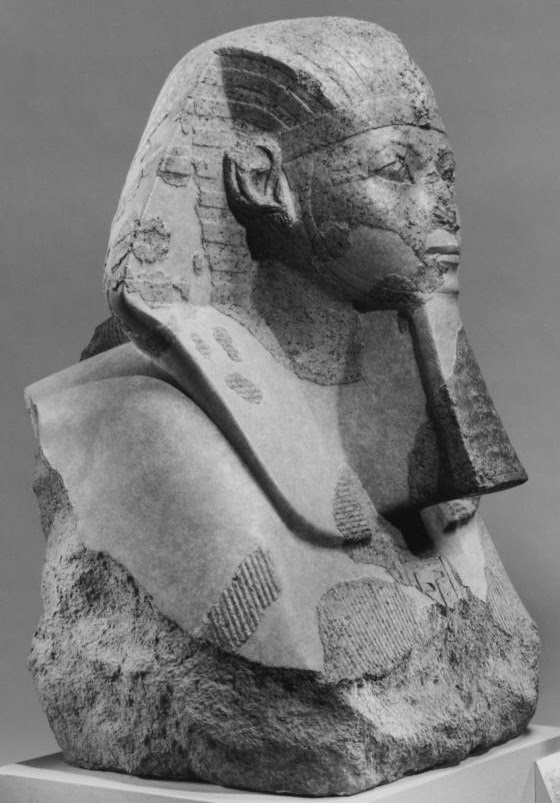
Sphinx of Hatshepsut (18th Dynasty), depicting a female ruler in traditional sphinx form.
This sculpture represents Hatshepsut, one of the few female pharaohs of ancient Egypt, shown in sphinx form. While the Great Sphinx of Giza is generally understood to represent a male ruler, examples like this demonstrate that the sphinx form itself was not exclusively male.
Source: Sphinx from Deir el-Bahri, Thebes 1926–28, The Metropolitan Museum of Art
Mysteries and Theories
Did Napoleon shoot the nose off the Sphinx?
Napoleon did not shoot the nose off the Great Sphinx of Giza. Both pictorial and written sources from before his arrival in Egypt show that the nose was already missing.
One of the clearest examples comes from Travels in Egypt and Nubia by Frederik Louis Norden. Based on his observations from 1737–38 (published in 1755), Norden’s illustrations depict the Sphinx without its nose decades before Napoleon’s campaign.
In the accompanying text, he remarks on the damage, writing that viewers feel “a sort of indignation at those, who have had the brutality to disfigure strangely its nose” (English edition, 1757, p.127).
Together, this evidence confirms that the loss of the Sphinx’s nose predates Napoleon and must have occurred earlier.
Frederik Louis Norden’s 18th-century drawing shows the Great Sphinx already missing its nose decades before Napoleon’s arrival in Egypt.
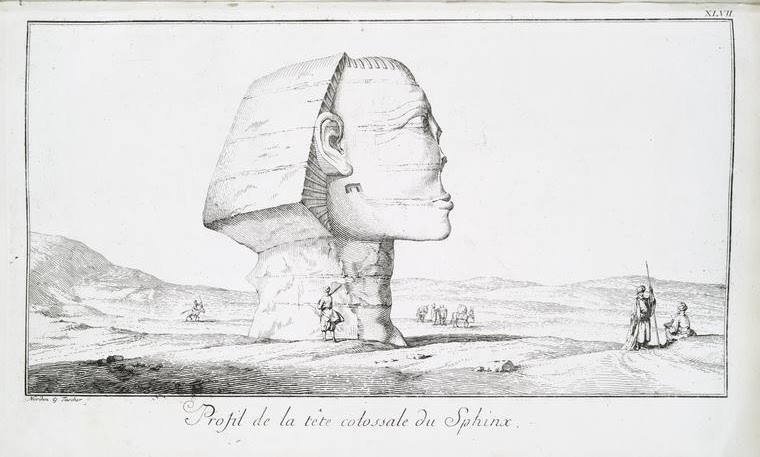
Profile of the Great Sphinx of Giza without its nose, illustrated by Frederik Louis Norden based on observations from 1737–38.
This illustration, published in Travels in Egypt and Nubia (1755), is one of the earliest detailed European depictions of the Great Sphinx. It clearly shows the monument with its nose already missing, providing strong visual evidence that the damage occurred before Napoleon’s campaign in Egypt (1798–1801). Norden’s accompanying text also refers to the disfigurement, confirming that the loss of the nose was already well established by the mid-18th century.
Source: The Antiquities, Natural History, Ruins and other Curiosities of Egypt, Nubia and Thebes (1780) by Frederik Louis Norden. Digital collections of the New York Public Library.
Why is the Sphinx missing its nose?
The exact cause of the missing nose of the Great Sphinx is not known with certainty, but historical sources suggest it was deliberately damaged in the medieval period.
The most commonly cited account comes from the Egyptian historian al-Maqrizi, writing in the early 15th century. He records that in 1378–79 CE a religious zealot named Muhammad Sa’im al-Dahr defaced the Sphinx while attempting to suppress what he considered idolatrous practices.
According to al-Maqrizi, the man “set out… to fight and destroy superstitions” and mutilated the face of the Sphinx (which he refers to as Abu al-Hol), after which it “has remained in this state.” This places the damage more than four centuries before Napoleon’s arrival in Egypt.
Al-Maqrizi’s report remains the most widely cited explanation for the loss of the Sphinx’s nose.
Drawings from Napoleon’s Egyptian expedition show the Great Sphinx missing its nose
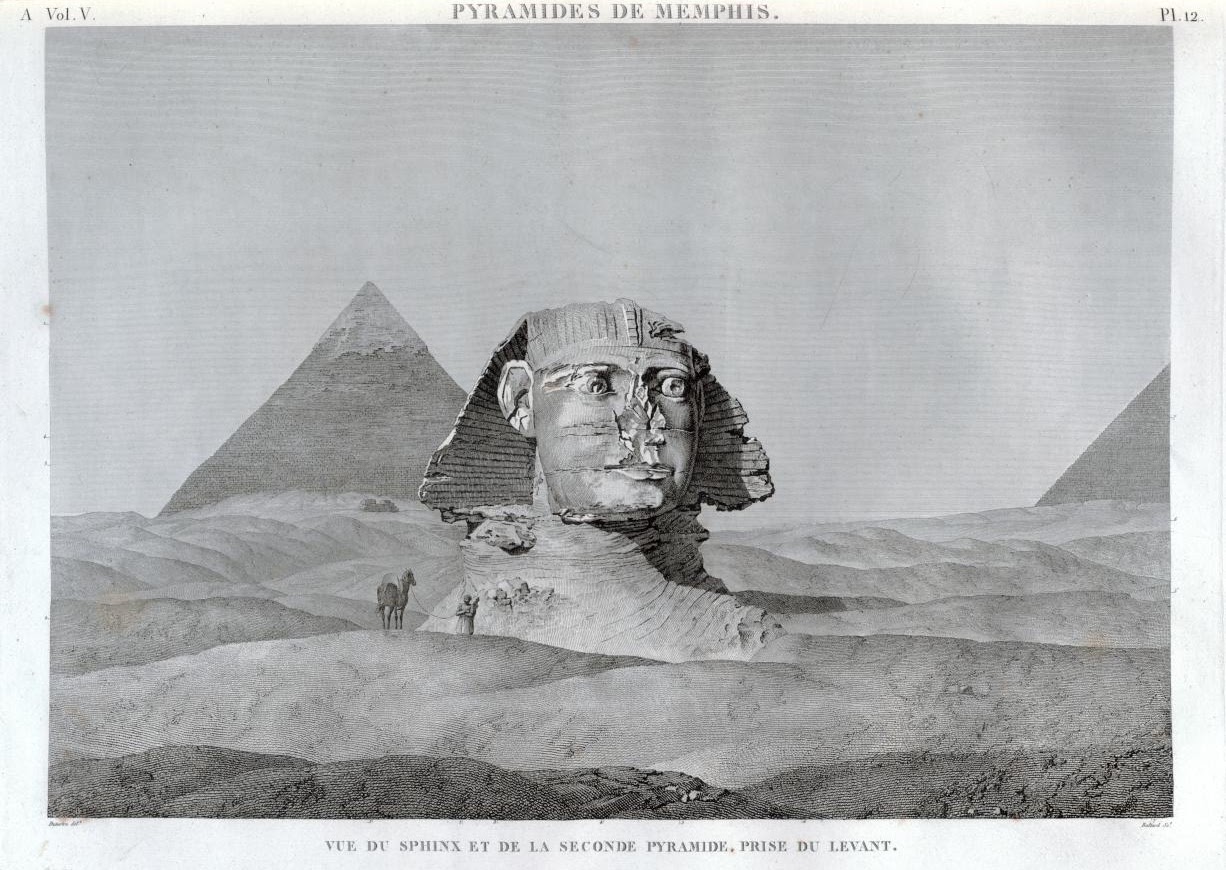
Detail of the Great Sphinx’s face with the missing nose, recorded during Napoleon’s Egyptian expedition (late 18th century).
This illustration, based on sketches made during Napoleon’s Egyptian expedition (1798–1801) and later published in Description de l’Égyptee (1822), clearly shows the disfigurement of the Great Sphinx’s face, consistent with the damage described by al-Maqrizi in the 15th century.
Source: Volume 5 of the plates of antiquities from “Description de l’Égypte” (1822), Digital collections of the New York Public Library.
What is buried under the Sphinx?
Several tunnels, shafts, and natural cavities exist around and beneath the Great Sphinx of Giza. However, no large hidden chamber or so-called “Hall of Records” has ever been confirmed by archaeology.
The main features are:
- Head cavity (top of the Sphinx’s head):
An ancient, man-made conical opening cut into the top of the head, often described as a shaft or hole.
- Perring’s Hole (behind the head):
A shallow modern excavation (around 1 metre deep) created by John Perring, engineer to Howard Vyse, during early 19th-century investigations.
- Bedrock fissure (towards the back of the Great Sphinx):
A natural geological fracture in the limestone body of the Sphinx, sometimes mistaken for an artificial tunnel.
- Rear shaft (behind the Sphinx):
A genuine ancient tunnel identified during modern archaeological work by Mark Lehner and Zahi Hawass.
For a more detailed analysis of these features, see the articles on this page beginning here.
The earliest depictions of the Great Sphinx sometimes show a stylised structure beneath it.
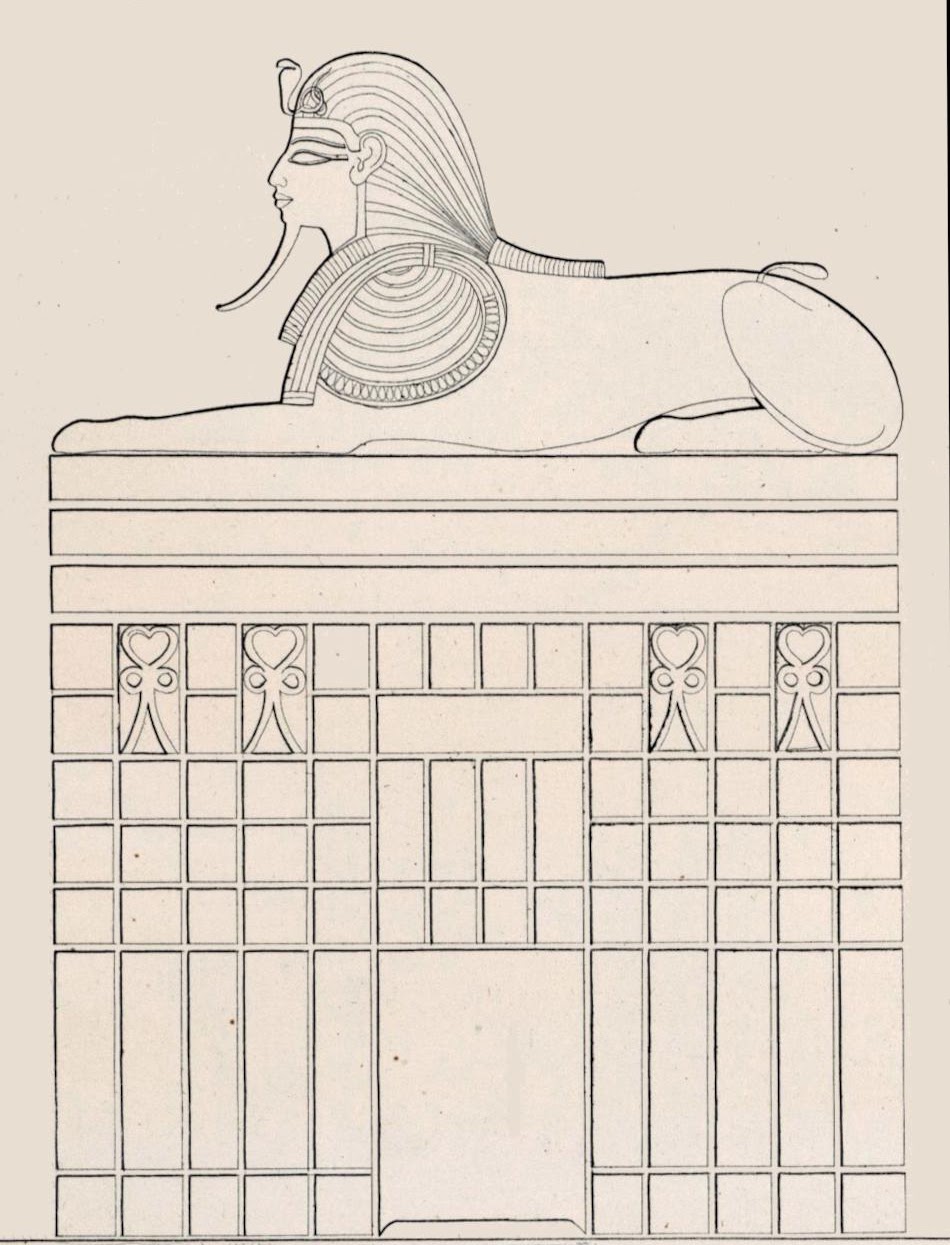
Detail from Lepsius’s drawing of the Dream Stele showing the Sphinx resting above a stylised structure with a doorway beneath.
This detail from a 19th-century recording of the Dream Stele shows the Sphinx positioned above a schematic, temple-like structure. Such representations have contributed to long-standing speculation about chambers beneath the Sphinx, although modern archaeology has not confirmed the existence of large hidden rooms.
Source: General Research Division, The New York Public Library. Neues Reich. Dynastie XVIII. Pyramiden von Giseh [Jîzah]. (1849 – 1856) Stele vor dem grossen Sphinx.
Modern surveys identify a small number of shafts, cavities, and natural fissures around the Sphinx, but no large hidden chambers.
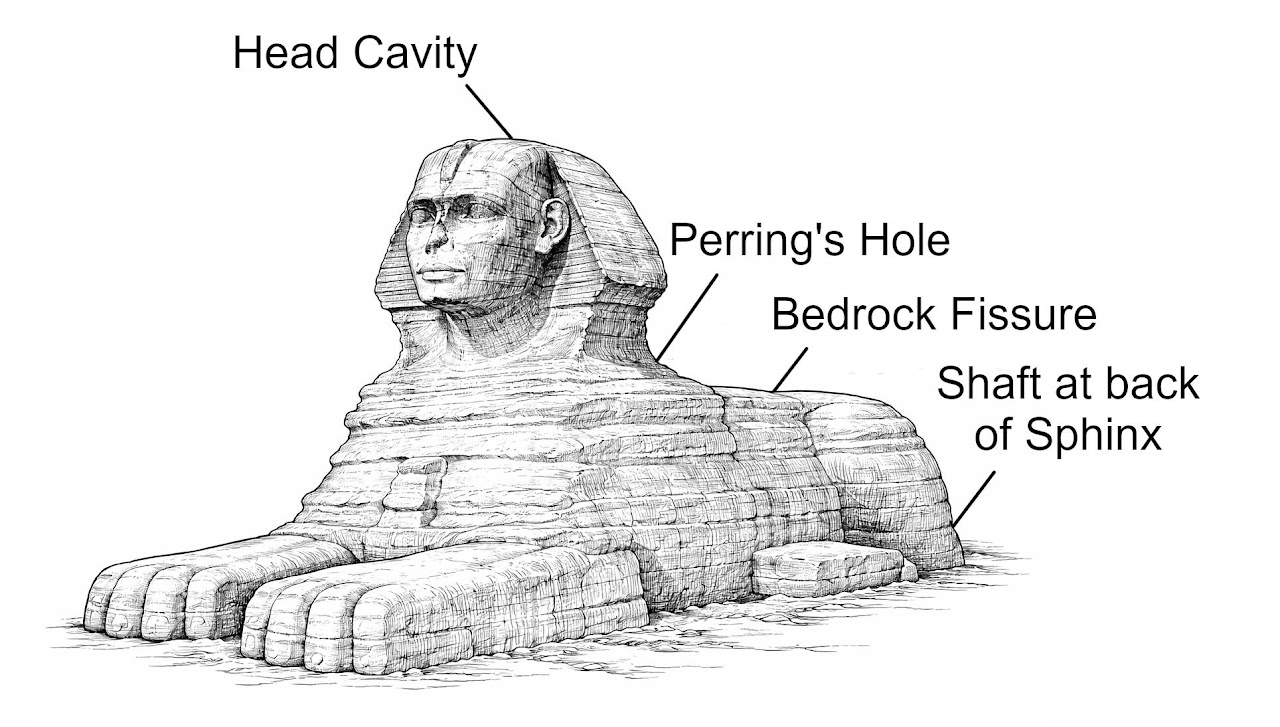
Diagram showing known features around the Great Sphinx, including the head cavity, Perring’s Hole, bedrock fissure, and rear shaft.
This schematic illustrates the main known openings and geological features associated with the Great Sphinx. These include both ancient and modern interventions, as well as natural fissures in the bedrock. None of the currently known features corresponds to the large internal chambers referred to by Edgar Cayce as the “Hall of Records.”
Source: thegreatsphinxofgiza.com
Does the Sphinx guard the pyramids?
A guardian role is one of the most common interpretations of the Great Sphinx, although no surviving Old Kingdom text states its original function in those terms.
In ancient Egypt, sphinxes commonly flanked entrances, causeways, and processional routes, often arranged in pairs as protective symbols. While the Great Sphinx stands alone, its position at the edge of the Giza Plateau strongly suggests a similar function.
It likely served as a divine guardian of the necropolis, overlooking the pyramids, temples, and mastaba tombs, while also expressing royal power and sacred authority.
This protective role forms part of the wider symbolic and religious meaning of the monument (see What was the purpose of the Great Sphinx? above).
In ancient Egypt, sphinxes were sometimes arranged in rows along processional routes, serving as symbolic guardians of sacred spaces.
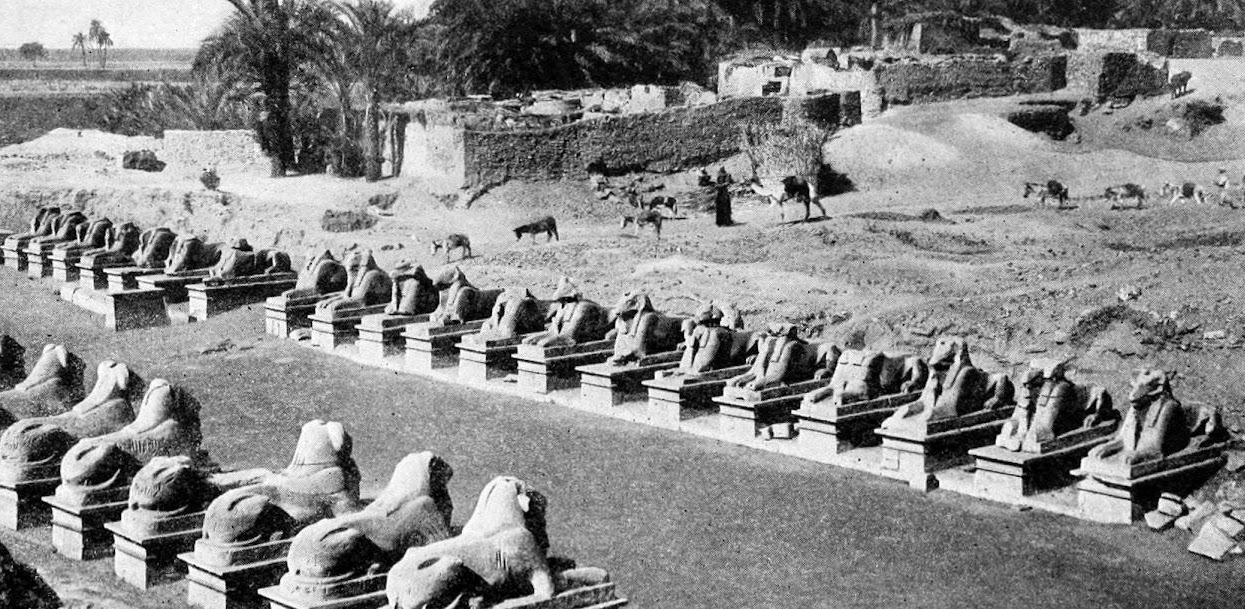
Row of criosphinxes (ram-headed sphinxes) lining the processional way to the Temple of Karnak.
This photograph shows a procession of criosphinxes at Karnak, each with the body of a lion and the head of a ram, associated with the god Amun. These rows of sphinxes emphasise their role as protective guardians. This architectural use helps contextualise the Great Sphinx of Giza as part of a broader tradition of sacred guardianship.
Source: From Eight Journeys Abroad (1917) by Mary & Frank H Rosengarten
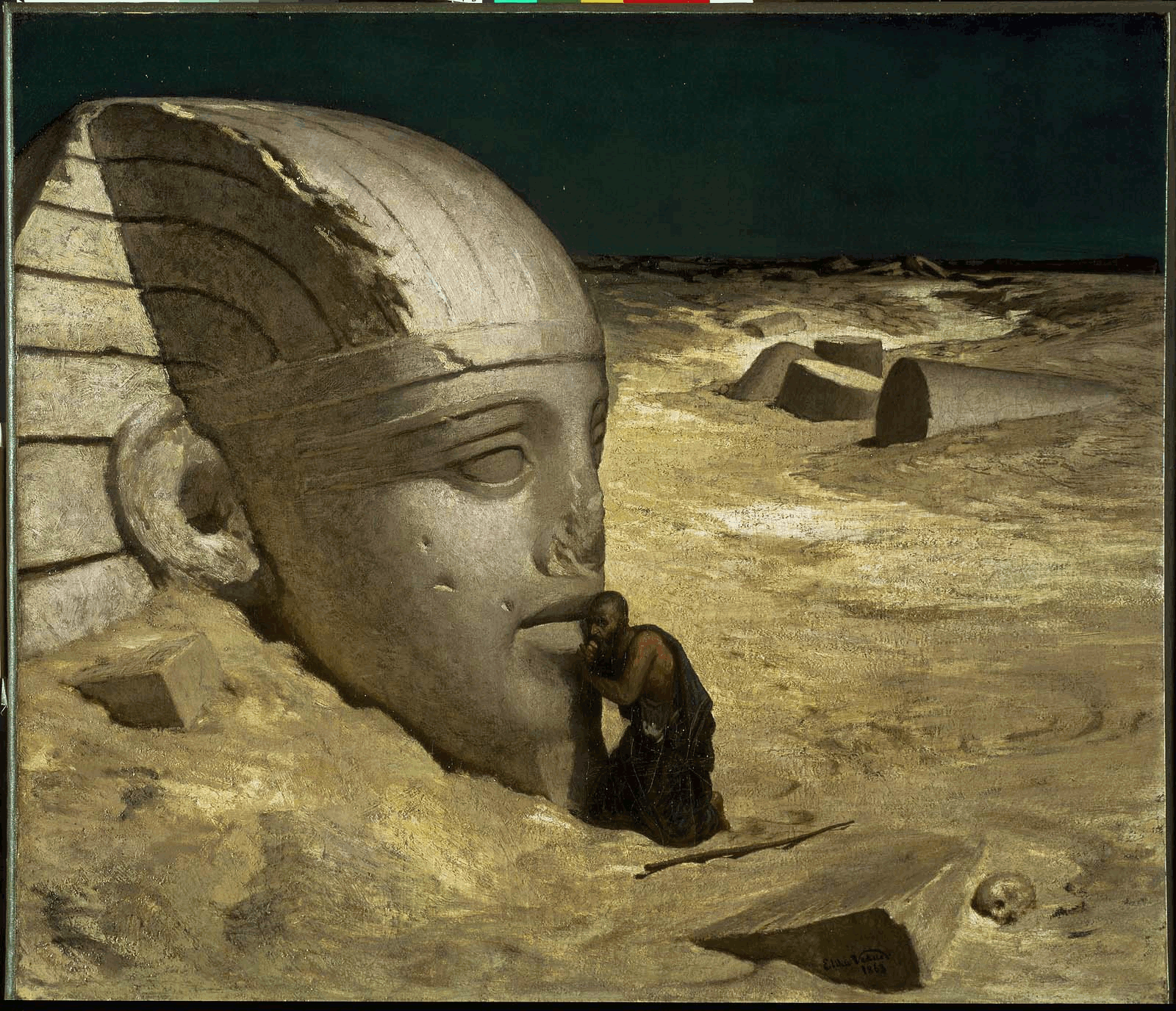
Page Title Image: “The Questioner of the Sphinx” by Elihi Vedder dating to 1863 from the digital collection of the Boston Museum of Fine Arts.